 Save
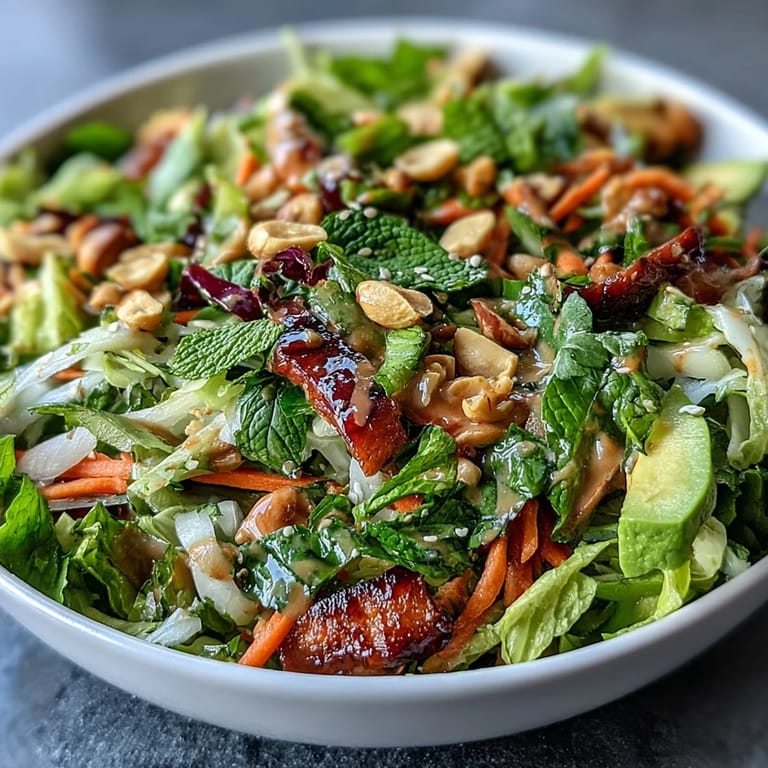
Save Last summer, a friend brought this vibrant salad to a picnic, and I watched people come back for thirds without realizing they were eating something entirely plant-based. The way the peanut dressing pooled into the crevices of the vegetables, how the fresh herbs released their perfume as you tossed everything together—it felt less like eating a salad and more like a small celebration on a plate. I went home that evening determined to recreate it, and now it's become my go-to whenever I need something that tastes like sunshine and tastes impressive without the fuss.
I made this for my sister's book club gathering on a warm evening, and she told me later that people were still talking about it days afterward. There's something about serving a salad that's this colorful and alive that makes everyone feel taken care of, even when it's the easiest thing you've ever put together. She's since made it three times herself, and each time she texts me about how she switched up one ingredient or added something unexpected.
Ingredients
- Red cabbage: Shredded cabbage keeps its crunch longer than you'd expect and brings an earthy sweetness that balances the peanut dressing beautifully.
- Carrots: Shredded carrots add natural sweetness and stay tender-crisp, giving you that satisfying texture that makes every forkful feel substantial.
- Cucumber: Thinly sliced cucumber introduces coolness and prevents the salad from ever feeling heavy, no matter how much dressing you add.
- Rice noodles: Optional, but they absorb the dressing and turn this from a side dish into a complete meal that leaves you satisfied.
- Red bell pepper: Thinly sliced peppers contribute bright color and a subtle sweetness that plays wonderfully with the lime and sesame in the dressing.
- Bean sprouts: They're delicate and add a whisper of crunch that makes the texture profile interesting without being tough to eat.
- Fresh mint, cilantro, and basil: These herbs are non-negotiable; they're what transform this from a vegetable pile into something that tastes like a Vietnamese market stall.
- Avocado: Sliced just before serving, avocado adds richness and creaminess that makes the whole salad feel indulgent.
- Roasted peanuts: Chopped peanuts provide a nutty depth and texture that echoes the peanut dressing, tying the whole dish together.
- Creamy peanut butter: The base of your dressing should be smooth and unsweetened so the other flavors can shine without competition.
- Lime juice: Freshly squeezed lime is essential here—bottled lime juice tastes tired in comparison and will dull the brightness of everything else.
- Soy sauce or tamari: This adds umami depth and a subtle saltiness that makes you crave another bite.
- Maple syrup: A touch of sweetness rounds out the peanut butter and balances the acidity from the lime.
- Toasted sesame oil: A small amount goes a long way, adding an aromatic nuttiness that you can't replicate with any other oil.
- Garlic and ginger: Minced fresh garlic and grated ginger wake up the dressing and give it backbone so it doesn't taste one-dimensional.
Tired of Takeout? 🥡
Get 10 meals you can make faster than delivery arrives. Seriously.
One email. No spam. Unsubscribe anytime.
Instructions
- Gather and prep your vegetables:
- Start by shredding your cabbage and carrots, slicing your cucumber into half-moons, and thinly slicing your bell pepper so everything is ready to go. This is honestly the longest part of the recipe, and once it's done, you're basically finished.
- Combine the salad base:
- Toss the cabbage, carrots, cucumber, rice noodles if using, bell pepper, bean sprouts, and all those fresh herbs together in a large bowl. Be gentle so you don't bruise anything, but make sure everything mingles so the flavors start getting acquainted.
- Arrange and top:
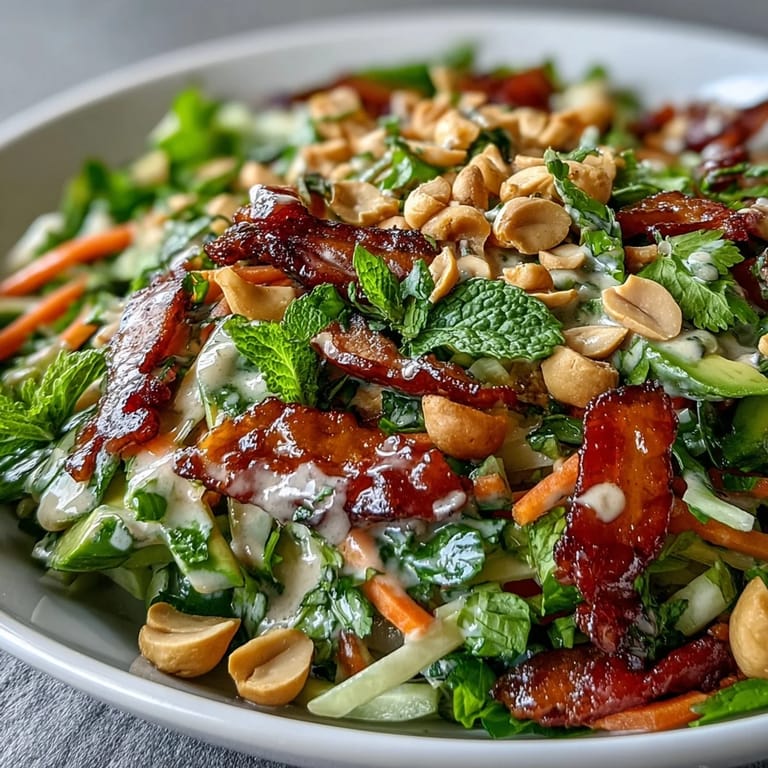
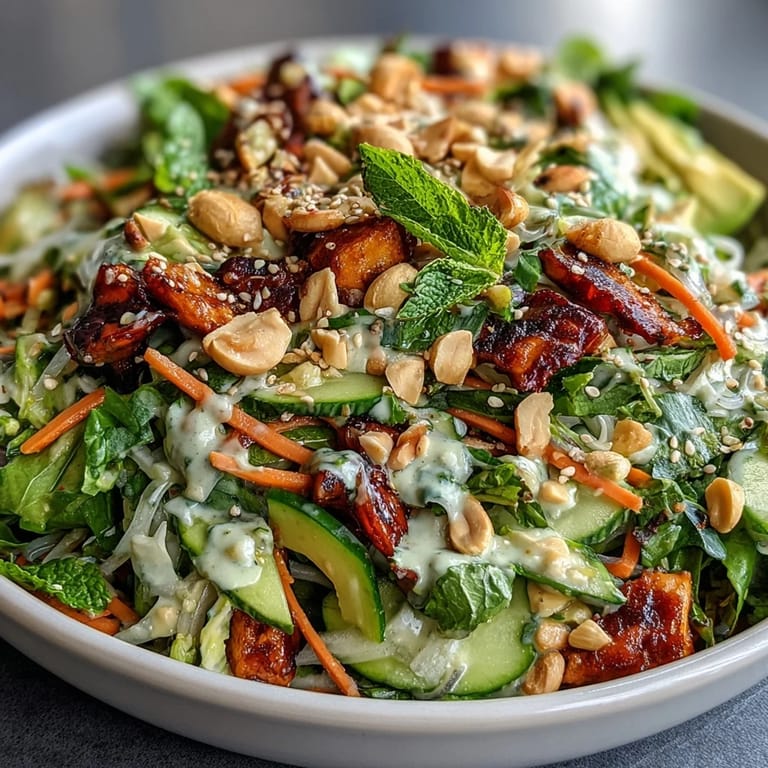
- Spread your salad mixture onto a serving platter or into individual bowls, then arrange avocado slices on top and scatter the chopped peanuts over everything. This is where it gets beautiful, so take a second to appreciate what you've made before the dressing comes into play.
- Make the dressing:
- In a small bowl, whisk together the peanut butter, lime juice, soy sauce, maple syrup, sesame oil, garlic, and ginger until they start coming together. Add the warm water one tablespoon at a time, whisking between each addition, until you have a consistency that's pourable but not thin and watery—it should cling to the vegetables, not run right off.
- Dress and serve:
- Drizzle the dressing over the salad right before serving, or keep it on the side so people can add as much or as little as they want. Toss gently one more time if you're combining everything in a bowl, then eat immediately while everything is fresh and the vegetables still have their snap.
 Save
Save My neighbor mentioned she'd never eaten anything vegan before, so I made her a bowl of this and left it at her door one afternoon. She came back an hour later asking for the recipe and admitting she'd expected to miss cheese or something, but instead she'd just tasted fresh food that made her feel good. That moment made me realize this dish isn't about what it doesn't have—it's about what it absolutely overflows with.
The Magic of Fresh Herbs
The herbs in this salad aren't just flavor—they're the entire personality of the dish. When you tear mint and basil by hand instead of chopping them with a knife, the leaves release their oils more gently and taste brighter, less bruised and bitter. I learned this when I was in a hurry once and used a knife on everything, and the dressing couldn't shine through all the green noise I'd created.
Building Your Peanut Dressing
The peanut dressing is where the magic happens, so don't rush it or assume you can just dump everything in and move on. I used to make mine too thick because I was nervous about overdoing the water, but then I realized the warmth of the water actually helps the peanut butter loosen and incorporate, creating something silky instead of gloppy. Once you nail the consistency on the spoon, you'll understand how much a good dressing can transform a simple pile of vegetables into something people actually crave.
Customizing Without Losing the Soul
One of the reasons I keep making this salad is because it bends to whatever I have on hand without losing its identity. I've added shredded daikon radish for extra bite, swapped the bean sprouts for shredded beets when I was in the mood for earthiness, and even used almond butter when my peanut butter jar was empty. The core flavors are strong enough to hold everything together, so you can play around without feeling like you're making something completely different.
- If you want heat, add a dash or two of sriracha to the dressing, but start small because it builds as it sits.
- Snap peas or shredded radishes add crunch and won't wilt like greens might, so they're perfect if you're serving this a few hours after assembly.
- Toasted cashews or sunflower seeds work beautifully in place of peanuts if you're cooking for someone with allergies.
 Save
Save This salad has become my answer to the question of how to make something that's good for you taste exciting. It's the kind of dish that proves you don't need complicated techniques or hard-to-find ingredients to create something memorable.
Recipe FAQ
- → Can I omit the rice noodles from the salad?
Yes, rice noodles are optional and can be excluded for a lighter, crunchier texture without losing flavor.
- → What alternatives can I use for peanut butter in the dressing?
Almond or sunflower seed butter can replace peanut butter for a different nutty flavor or allergy concerns.
- → How can I make the dressing spicier?
Adding a dash of sriracha or chili flakes to the peanut dressing introduces a pleasant spicy kick.
- → Is this dish suitable for gluten-free diets?
Yes, using tamari or coconut aminos in the dressing keeps it gluten-free, alongside naturally gluten-free ingredients.
- → What fresh herbs are recommended in this salad?
Fresh mint, cilantro, and basil complement the crisp vegetables with aromatic, bright flavors.
- → How should I store leftovers to maintain freshness?
Store the salad and dressing separately in airtight containers in the refrigerator and combine just before serving.