 Save
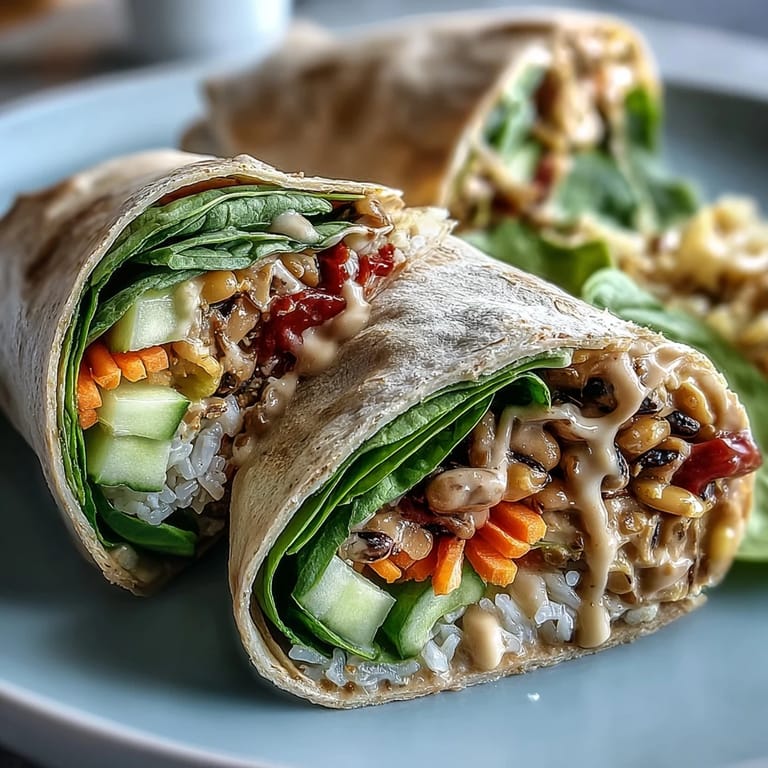
Save There's something wonderfully grounding about wrapping your hands around a warm tortilla stuffed with things that actually taste like food—no pretense, just honest ingredients working together. I discovered these black-eyed pea wraps on a Tuesday afternoon when my fridge looked a little sad and my energy was sagging, so I started rooting around for something that felt both comforting and alive. The first bite surprised me; the tahini sauce melted into all those textures, and suddenly I understood why some meals stick with you longer than others.
I made these for a friend who'd been eating pretty carefully, and I remember her hesitation before the first bite—that little pause where you're wondering if health food actually tastes good. Then her face just softened, and she asked for the recipe before she'd even finished eating. That's when I knew these wraps had crossed over from being practical to being something people genuinely crave.
Ingredients
- Black-eyed peas (1 cup cooked): These little legumes hold their shape beautifully and have a nutty sweetness that plays perfectly with the earthiness of tahini; canned works just fine if you drain and rinse them well.
- Brown rice or quinoa (1 cup cooked): Either grain works, though I've noticed quinoa creates a lighter, fluffier wrap while rice gives you something more substantial to bite into.
- Baby spinach (1 cup): Fresh and tender, it wilts slightly from the warm grains and becomes almost silky without losing its nutrients.
- Carrot (1 medium, julienned): The sweetness cuts through the tahini beautifully, and the thin slices make rolling easier than chunky pieces ever could.
- Red bell pepper (1 small, thinly sliced): This brings brightness and just a whisper of sweetness that balances the deeper flavors happening in your wrap.
- Red onion (1/4 cup, thinly sliced): Raw and sharp, it wakes everything up; don't skip this because it's what keeps the wrap from tasting gentle and boring.
- Cucumber (1/2 cup, sliced into strips): The cool crunch here is essential—it's your textural anchor and the thing that makes each bite feel fresh.
- Tahini (1/4 cup): This is the soul of the whole wrap; buy good tahini because cheap tahini tastes dusty and bitter no matter what you do to it.
- Lemon juice (2 tbsp): Acid is everything here—it brightens the tahini and keeps the sauce from feeling heavy.
- Olive oil (1 tbsp): A good one makes the sauce silky; skip the budget bottle on this ingredient alone.
- Garlic (1 clove, finely minced): Just enough to suggest itself without shouting; I use a microplane because it distributes more evenly than a knife ever could.
- Water (2-3 tbsp): This is your sauce's personality—add slowly and taste as you go, because you're looking for something that drizzles, not something that runs.
- Ground cumin (1/4 tsp): A small amount that echoes something warm and vaguely familiar without declaring itself.
- Salt and black pepper (to taste): These aren't afterthoughts; they're what unlock all the other flavors.
- Whole wheat tortillas (4 large): Room temperature ones roll more easily, and I always buy the kind with actual texture and grain visible in them.
Tired of Takeout? 🥡
Get 10 meals you can make faster than delivery arrives. Seriously.
One email. No spam. Unsubscribe anytime.
Instructions
- Make the tahini sauce first:
- Whisk together tahini, lemon juice, olive oil, minced garlic, cumin, salt, and pepper in a small bowl, then gradually add water a tablespoon at a time until you've got something that looks like thick honey and moves slowly off a spoon. Taste it and adjust—this is your dressing, so it should make you want to eat it with a spoon.
- Warm your tortillas:
- A dry skillet over medium heat for about 30 seconds per side makes them pliable without crisping them, though a quick microwave wrapped in a damp towel works beautifully too. The goal is warmth and flexibility, not toasted.
- Assemble your first wrap:
- Lay a tortilla flat on a clean surface and layer a quarter of the spinach in the center, then the black-eyed peas, cooked grain, carrot, bell pepper, red onion, and cucumber in a neat pile rather than spreading everything thin. Drizzle generously with tahini sauce so you can actually taste it in every bite.
- Roll with confidence:
- Fold the sides of the tortilla in about two inches, then roll from the bottom up tightly but not aggressively—you're looking for snug and secure, not strangled. The sides-first method keeps everything from falling out the ends.
- Repeat and serve:
- Make the remaining three wraps using the same technique, then slice each one in half diagonally if you want them to look intentional. Serve immediately while the tahini sauce is still at its best, or wrap tightly in parchment or foil for later.
 Save
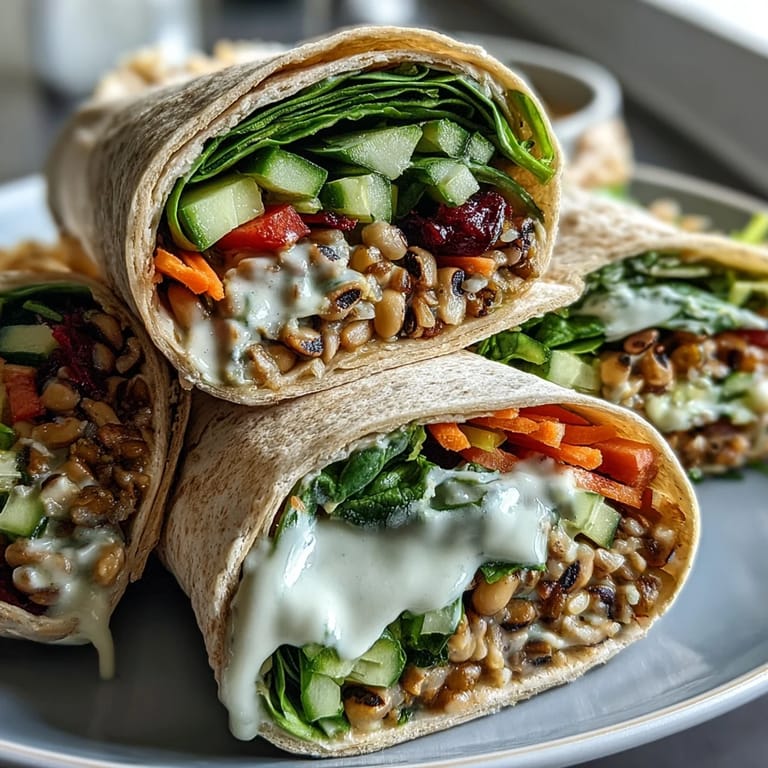
Save There was something almost meditative about the moment when I finally understood that food doesn't have to be complicated to be nourishing—that sometimes the best meals are the ones where each ingredient gets to just be itself. These wraps became my answer whenever someone asked what I was eating that looked so good.
Building Your Tahini Sauce Philosophy
Tahini sauce is forgiving once you understand it, but it rewards attention in a way that makes the whole wrap better. I used to make it too thick and think it was broken, until a friend pointed out that I was adding water like I was afraid of it. Now I understand that good tahini sauce should coat a spoon and fall back into itself, which means you're adding water until it feels almost too thin, then tasting it and realizing it's exactly right.
The Vegetable Cutting Strategy
Thin, uniform cuts matter more than you'd think because they change how the wrap behaves when you're rolling it. Chunky vegetables create lumps that make rolling stressful and eating messy, while thin slices nestle together and let you actually close the wrap without it exploding everywhere. This is one of those lessons that seems small until you're sitting at your desk trying to eat something you just made, and suddenly it matters a lot.
Making These Wraps Your Own
The magic of this format is that you can absolutely adapt it without breaking anything—add herbs, swap grains, introduce elements that speak to you and your kitchen. I've made versions with cilantro and lime, others with roasted chickpeas instead of black-eyed peas, and one memorable afternoon when I was out of tahini and used a tahini-free approach that was different but genuinely excellent. The foundation is solid enough to play with.
- Fresh herbs like cilantro or parsley transform these wraps into something that feels like a celebration.
- A ripe avocado or a spoonful of hummus adds creaminess if you want something that feels richer.
- Hot sauce or a splash of extra lemon juice is your way of adjusting the temperature and brightness to match your actual mood.
 Save
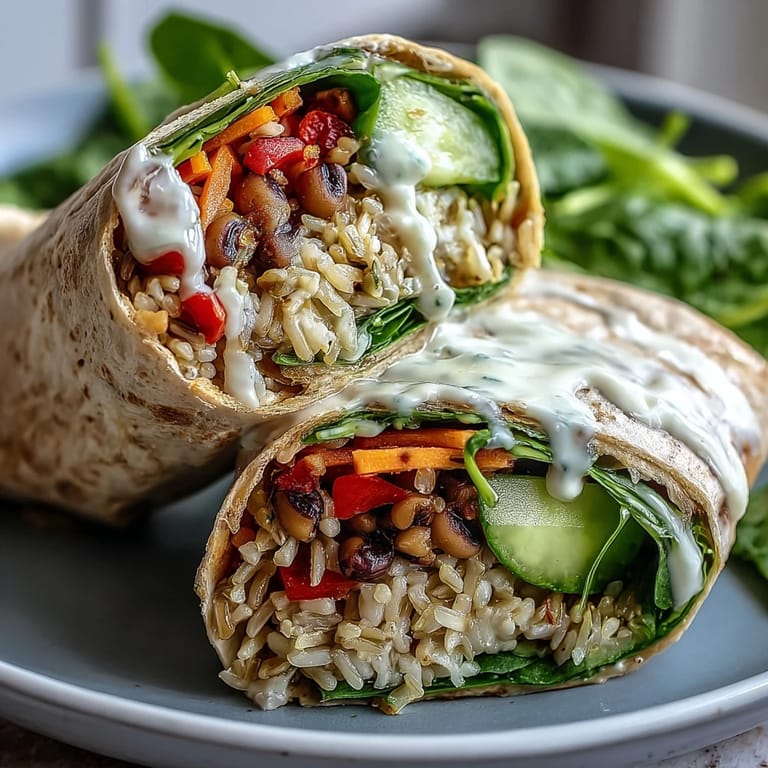
Save These wraps quietly became one of those meals I make when I want to feel good—not in a virtuous, self-punishing way, but in the way that happens when you eat something honest that actually tastes like something worth eating. They're proof that nourishment and pleasure are not opposing forces.
Recipe FAQ
- → Can I make these wraps ahead of time?
Yes, these wraps keep well for 24-48 hours when wrapped tightly in foil or parchment. For best results, store the tahini sauce separately and drizzle just before eating to prevent sogginess. The tortillas may soften slightly but remain delicious.
- → What other grains work well in these wraps?
Beyond brown rice and quinoa, try farro, bulgur, barley, or even millet. Cooked lentils or chickpeas can partially replace the black-eyed peas. Each grain brings its own texture and nutritional profile to the filling.
- → How can I add more protein to these wraps?
Crumble feta or goat cheese on top, add sliced hard-boiled eggs, or include shredded chicken if not following a vegetarian diet. Extra hemp seeds or chopped walnuts also boost protein while adding pleasant crunch.
- → Is the tahini sauce necessary?
The tahini sauce provides essential creaminess and flavor, but you could substitute with hummus, avocado spread, or a garlic yogurt sauce. The tahini's nutty profile complements the black-eyed peas particularly well though.
- → Can I use fresh black-eyed peas instead of canned?
Absolutely. Soak dried black-eyed peas overnight, then simmer for 45-60 minutes until tender. Fresh peas cook even faster, about 20-30 minutes. Drain well before using to prevent soggy tortillas.
- → What vegetables can I substitute?
Shredded cabbage, kale, or roasted sweet potatoes work beautifully. Try radishes, jicama, or sliced beets for crunch. Grilled zucchini or eggplant add depth. Use whatever fresh produce appeals to you.