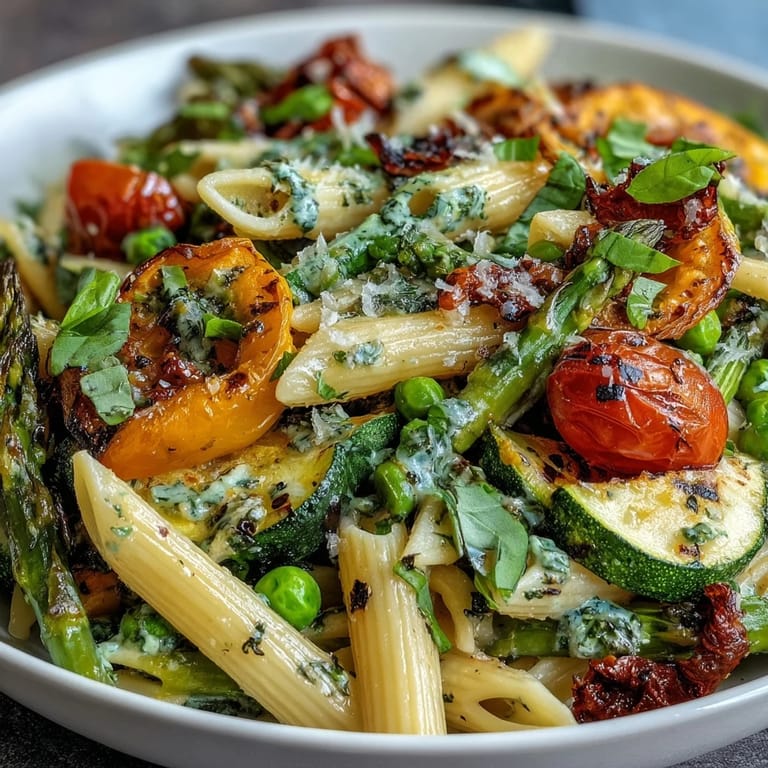
 Save
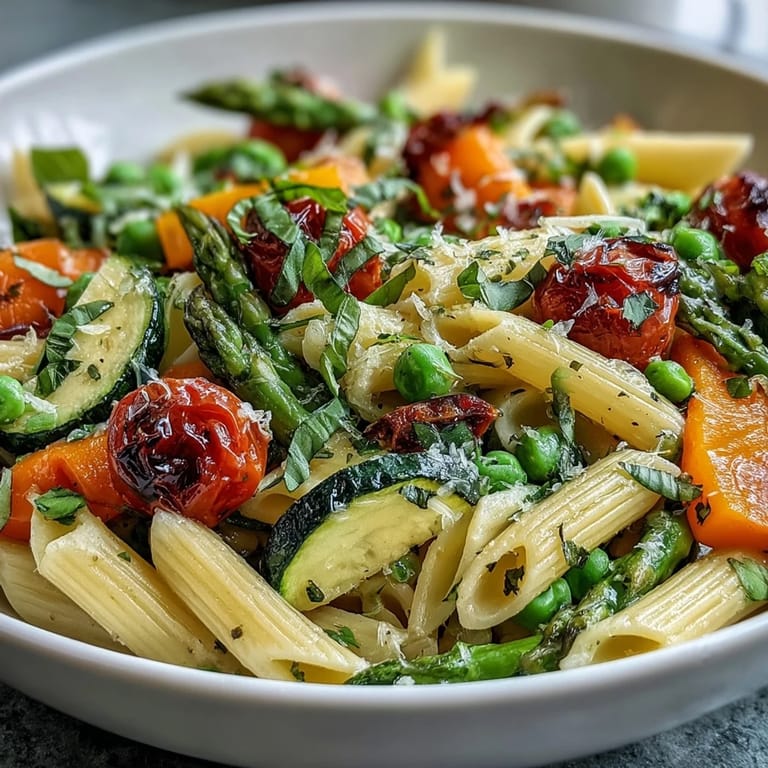
Save On a late spring afternoon, the windows were open and sunlight spilled onto the kitchen counter, setting the stage for my first attempt at pasta primavera. The sound of chopping vegetables competed with the birdsong outside, and every ingredient felt like a tiny celebration of the season. I remember thinking how the fresh zucchini and asparagus looked almost too pretty to cook. There's something thrilling about tossing a handful of basil into a hot pan and letting its aroma mingle with garlic and olive oil. This dish instantly became a symbol of spring for me—not just a meal, but a mood booster in a bowl.
One weekend, I cooked this for friends after a morning spent picking up vegetables at the farmer's market. Everyone gathered in the kitchen, curious about what I was making, and ended up helping to slice, stir, and steal stray bits of Parmesan. The laughter and the hum of spring conversation filled the air, making the pasta not just a meal, but a centerpiece for connection.
Ingredients
- Pasta: Using penne or farfalle helps the sauce and veggies cling to every bite, and I learned to salt the water generously for flavor.
- Zucchini and Yellow Squash: Half-moons keep texture, and letting them stay crisp prevents any soggy disappointment.
- Asparagus: Thin 2-inch pieces cook quickly and bring a delicate bite you don't want to miss.
- Cherry Tomatoes: They burst just enough, adding fresh sweetness and color.
- Red Bell Pepper: Slicing thinly means you get a little crunch in each forkful—don't skip this.
- Peas: Frozen peas work in a pinch, but fresh is more vibrant; toss these in just before finishing.
- Garlic and Shallot: Sautéing them together builds the base aroma—watch the heat so neither burns.
- Fresh Basil & Parsley: Chop at the last minute for peak fragrance, and always save a sprinkle for serving.
- Lemon Zest & Juice: Adds brightness, and the zest especially lifts everything up.
- Olive Oil: Good-quality oil gives the sauce richness—use most for cooking, save a flourish for finishing.
- Parmesan Cheese: Fold it in off the heat so it melts gently rather than clumping.
- Salt, Pepper, & Red Pepper Flakes: Seasoning is your friend; taste as you go, and red pepper adds an unexpected hint of heat.
Tired of Takeout? 🥡
Get 10 meals you can make faster than delivery arrives. Seriously.
One email. No spam. Unsubscribe anytime.
Instructions
- Boil the Pasta:
- Start by bringing a pot of salted water to a lively bubble and cook your penne or farfalle until they're just al dente. Don't forget to save a splash of the cooking water before draining—it's liquid gold for the sauce.
- Sauté the Aromatics:
- Heat olive oil and listen for the gentle sizzle as you add shallots and garlic; the aroma will tell you they're ready. Stir gently for a minute, making sure nothing browns too fast.
- Cook the Vegetables:
- Drop the zucchini, yellow squash, asparagus, and bell pepper into the skillet and sauté until they're bright and just tender. Keep the veggies moving so they cook evenly but retain a playful crunch.
- Add Tomatoes and Peas:
- Toss in cherry tomatoes and peas, letting the tomatoes soften and peas brighten up without overcooking. A quick stir brings out their sweetness and color.
- Combine Pasta and Veggies:
- Add your drained pasta to the skillet and fold everything together with a wooden spoon—this is the moment the dish comes alive. The veggies and pasta should mingle, but don’t smash them.
- Add Sauce Elements:
- Pour in the reserved pasta water, lemon zest, lemon juice, basil, parsley, and drizzle the last bit of olive oil. Season thoughtfully with salt, pepper, and flakes—taste and tweak for perfection.
- Finish and Serve:
- Take the pan off the heat and stir in Parmesan cheese so it melts beautifully. Serve right away, topped with more cheese and herbs if you feel extra generous.
 Save
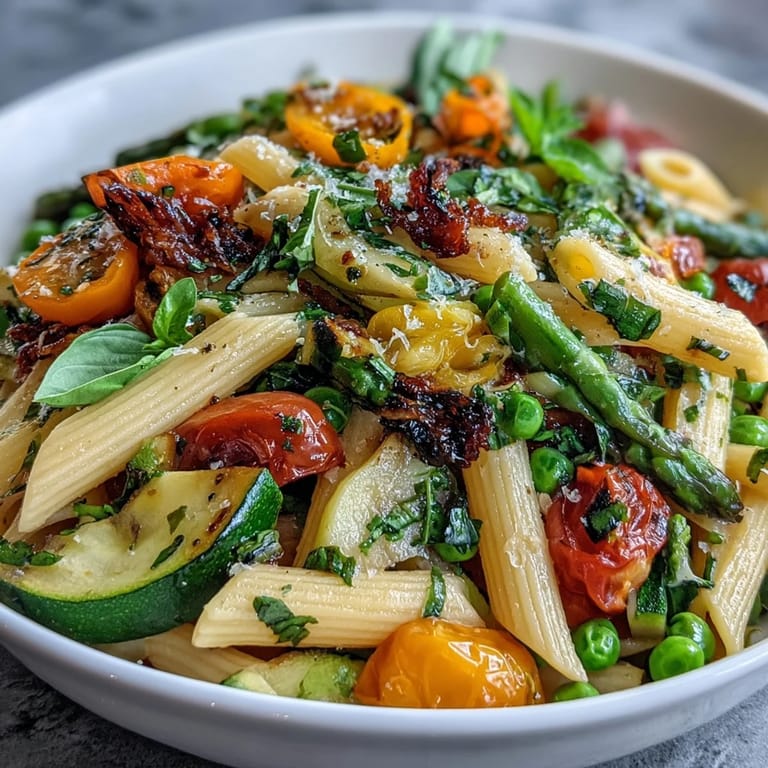
Save There was a moment when the kitchen smelled of lemon and fresh herbs, and a quiet fell over the table as everyone took their first bite. That peaceful pause—when flavors meet curiosity—felt like the true magic of spring. It’s a dish that opened up conversation and left memories lingering on plates.
How to Keep the Veggies Crisp
I learned that overcrowding the skillet is a surefire way to steam your vegetables instead of sautéing them. Cook in batches if you want each piece to stay snappy, and don’t be shy about tasting as you go for perfect tenderness.
What If You Want to Swap Ingredients
Experimenting with snap peas or spinach is easy and rewarding if you’re feeling adventurous or running low on something. Spring vegetables are forgiving—so long as you keep the colors vibrant and the flavors fresh, it’s a winning formula.
Serving Suggestions and Quick Fixes
Pairing this pasta with a crisp white wine elevates the meal, and a sprinkle of chopped herbs just before serving adds a final flourish. If you’re taking leftovers for lunch, a quick reheat on the skillet keeps things lively.
- For vegan guests, skip the Parmesan or use nutritional yeast.
- Serve with a lemon wedge for extra zing.
- Try toasted pine nuts on top for crunch.
 Save
Save May your kitchen be filled with spring’s colors and flavors whenever you make this meal. Pasta primavera has a way of making routine feel like a celebration.
Recipe FAQ
- → What vegetables are best for pasta primavera?
Zucchini, yellow squash, asparagus, bell pepper, cherry tomatoes, and peas work well. You can also try snap peas or spinach for variety.
- → How can I keep vegetables crisp and vibrant?
Cook vegetables quickly on medium heat and avoid overcooking to maintain their color and texture. Stir occasionally for even results.
- → Can I make this dish vegan?
Yes, simply omit the Parmesan or substitute it with a plant-based cheese. The rest of the ingredients are naturally vegan-friendly.
- → What pasta types are suitable?
Penne and farfalle are ideal, but you can use any short pasta shapes such as fusilli or rotini for the same effect.
- → What herbs add flavor to primavera?
Fresh basil and parsley enhance the sauce. Lemon zest and juice add brightness, while olive oil brings richness.
- → How do I serve pasta primavera?
Top with extra Parmesan and fresh herbs. Pair with a glass of crisp white wine for a refreshing meal.