 Save
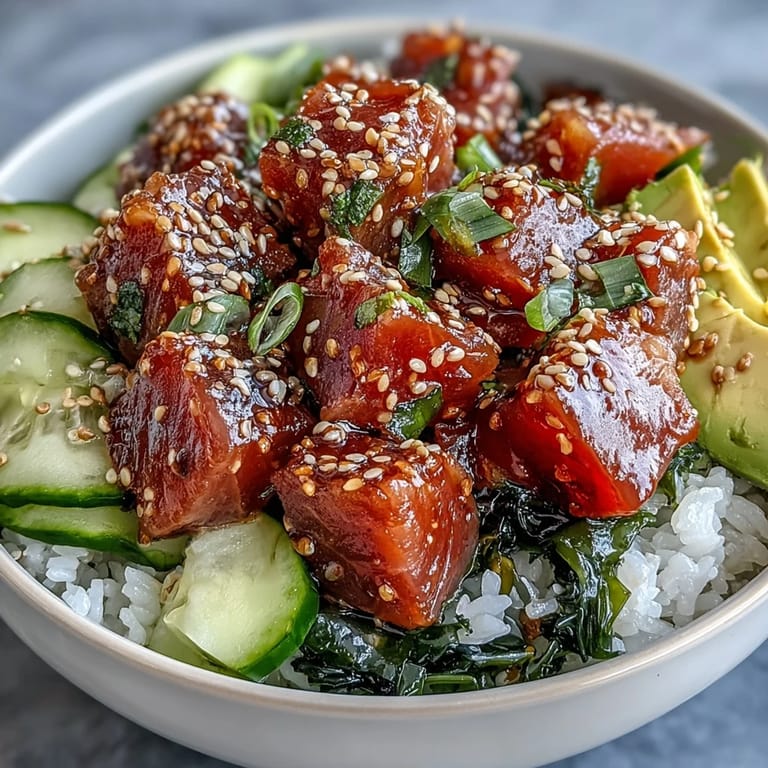
Save My coworker brought a poke bowl to lunch one Tuesday, and I watched her open that container like she was revealing buried treasure. The way the spicy tuna glistened under the office fluorescent lights, the careful arrangement of avocado and cucumber—it felt almost too beautiful to eat. She caught me staring and said, "You have to try this," sliding the bowl across her desk. One bite and I was hooked, chasing that perfect balance of creamy, spicy, and oceanic that somehow felt both indulgent and impossibly fresh.
I made this for friends during a casual summer gathering, and something magical happened when everyone customized their own bowls. One person added extra ginger, another drizzled more sesame oil, and suddenly the meal transformed into this communal experience where everyone felt like they were creating something uniquely theirs. Watching people discover their favorite combination made me realize this dish isn't just about the ingredients—it's about the joy of making something together.
Ingredients
- Sushi rice: The foundation that absorbs all the flavors, and rinsing it thoroughly makes all the difference—skip this step and you'll end up with a gluey, disappointing base.
- Rice vinegar, sugar, and salt: These three ingredients transform plain rice into something with subtle sweetness and brightness that can't be rushed.
- Sushi-grade tuna: This is not the time to compromise; ask your fishmonger specifically for sushi-grade and use it the same day you buy it for maximum safety and flavor.
- Japanese Kewpie mayonnaise: The richer, slightly sweeter cousin of regular mayo that makes the spicy tuna marinade taste noticeably better.
- Sriracha: Adjust this based on how much heat you genuinely want—I learned this lesson after making a bowl that had my guests reaching for water.
- Sesame oil: A small amount goes far; this ingredient smells like toasted nuts and adds depth that nothing else can replicate.
- Lime juice: Freshly squeezed, never bottled—it brightens everything and prevents the tuna from tasting heavy.
- Cucumber and avocado: These provide cooling contrast and should be sliced just before serving to keep them at their crisp and creamy best.
- Seaweed salad: If you can't find it, roasted nori strips work beautifully as a substitute with a slightly different but equally satisfying texture.
Tired of Takeout? 🥡
Get 10 meals you can make faster than delivery arrives. Seriously.
One email. No spam. Unsubscribe anytime.
Instructions
- Prepare your rice properly:
- Rinse the sushi rice under cold running water, gently stirring with your fingers until the water runs completely clear—you'll know you're done when the water looks like plain tap water instead of milky. Combine with water in a saucepan, bring to a boil, then cover and reduce heat to low for 15 minutes before letting it stand for 10 minutes off the heat without peeking.
- Season the rice while it's still warm:
- Mix rice vinegar, sugar, and salt in a small bowl, then stir this mixture into the warm rice while gently fluffing it with a fork. The warmth helps the rice absorb the seasoning evenly, creating that signature slightly tangy, subtly sweet flavor that defines proper sushi rice.
- Create the spicy tuna magic:
- Whisk together mayonnaise, Sriracha, soy sauce, sesame oil, and lime juice in a medium bowl, tasting as you go because everyone's heat tolerance is different. Add your diced sushi-grade tuna and sliced green onion, then toss gently—you want the tuna to stay in distinct pieces, not become a paste.
- Gather and prepare all your toppings:
- Slice your cucumber and avocado at the last possible moment so they stay crisp and vibrant, shell your edamame if it isn't already prepared, and arrange everything where you can see it. Having everything ready before you start assembling makes the final steps feel almost meditative.
- Build your bowls with intention:
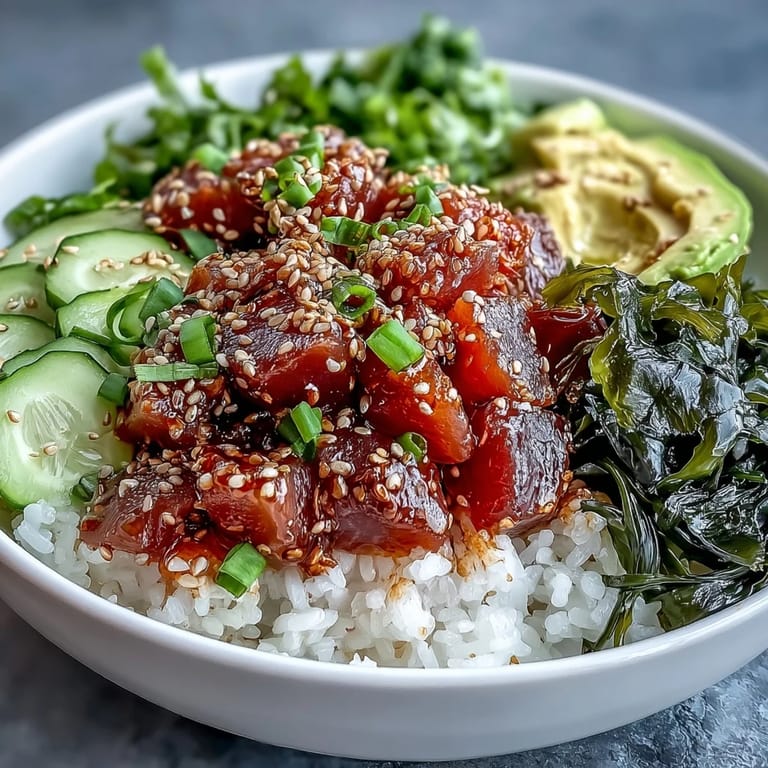
- Divide the cooled sushi rice among four bowls, creating a small well in the center where you'll nestle the spicy tuna. Arrange your fresh toppings in sections around the tuna like you're creating a edible still life, then finish with extra sesame seeds and a sprinkle of furikake if you have it.
 Save
Save There's something grounding about building a poke bowl by hand, watching the different colors and textures come together. It slowed me down on a day when everything else felt rushed, and somehow eating it mattered more than usual.
Getting the Rice Right Every Time
The rice is genuinely the most important element, even though the tuna gets all the attention. I discovered this the hard way after making a beautiful spicy tuna mixture only to have it undermined by rice that was either too firm or too mushy. The secret is patience: rinsing until the water is clear, cooking covered on low heat, and always letting it rest before seasoning. Once you nail this, every poke bowl you make will taste authentically restaurant-quality, and you'll stop wondering why homemade versions never quite matched what you paid for in restaurants.
Customizing Your Bowl for Your Preferences
This recipe is genuinely more of a framework than a rigid set of rules, and that's where it becomes really fun. I've made versions with brown rice for friends trying to eat healthier, substituted salmon when I couldn't find pristine tuna, and even added cucumber avocado slices to someone's bowl who mentioned wanting extra cooling elements. The toppings are flexible enough that you can build something different each time depending on what's fresh at your market or what your body is craving that particular day.
Flavor Building and Temperature Contrast
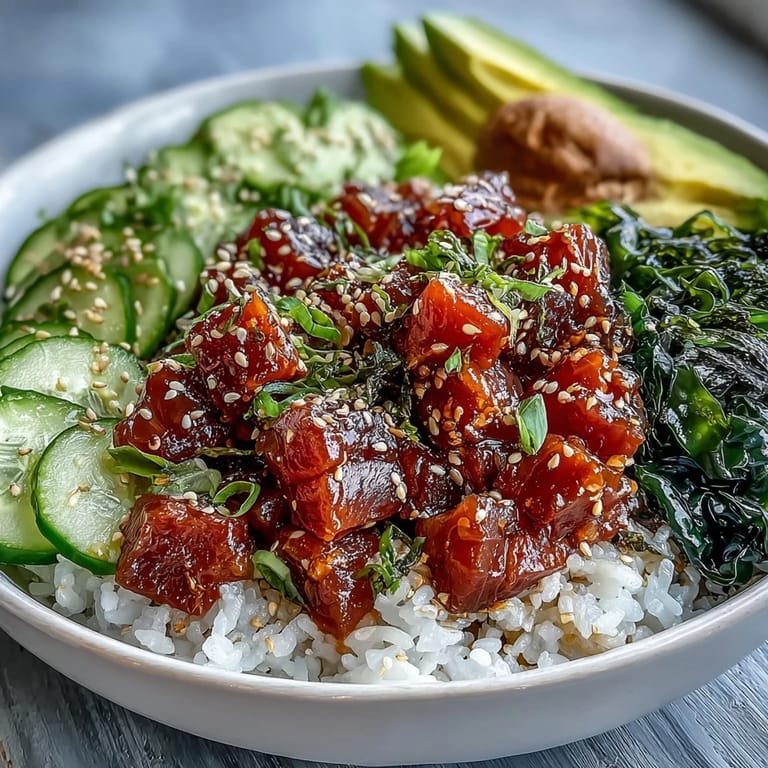
What makes a poke bowl crave-worthy is the intentional balance of warm, cool, spicy, fresh, and umami flavors all happening at once in your mouth. The warm sushi rice grounds everything, while the crisp cucumber and cool avocado provide contrast that prevents the bowl from feeling heavy. The spicy tuna cuts through all that richness, and the seaweed and sesame add subtle oceanic and nutty notes that keep you interested with every bite.
- Don't assemble your bowls until just before serving, because that's when everything tastes its absolute best.
- If you're making these for guests, prepare the rice and spicy tuna ahead, then let everyone arrange their own toppings so the experience feels interactive.
- Taste the spicy tuna marinade before adding the diced tuna to make sure the heat level matches what you actually want to eat.
 Save
Save This bowl became my answer to those moments when I want something that feels restaurant-special but actually comes together in my own kitchen. It's the kind of meal that makes you feel like you're taking care of yourself while having genuine fun with food.
Recipe FAQ
- → How do I make perfect sushi rice for this bowl?
Rinse the rice until water runs clear, then cook with water covered on low heat. After cooking, mix in rice vinegar, sugar, and salt, and fluff with a fork before cooling.
- → Can I substitute the tuna with other seafood?
Yes, salmon or other sushi-grade fish can be used to create a different flavor profile while maintaining a fresh texture.
- → What gives the spicy tuna its heat?
The heat comes from sriracha blended into the tuna marinade, which can be adjusted to suit your preferred spice level.
- → Are there alternatives to sushi rice for this dish?
Brown rice or quinoa can be used as a hearty, nutritious substitute, offering a slightly different texture and added fiber.
- → What toppings add the best texture contrast in this bowl?
Cucumber provides crunch, avocado adds creaminess, edamame offers a pop of freshness, and seaweed salad contributes a briny, tender bite.