 Save
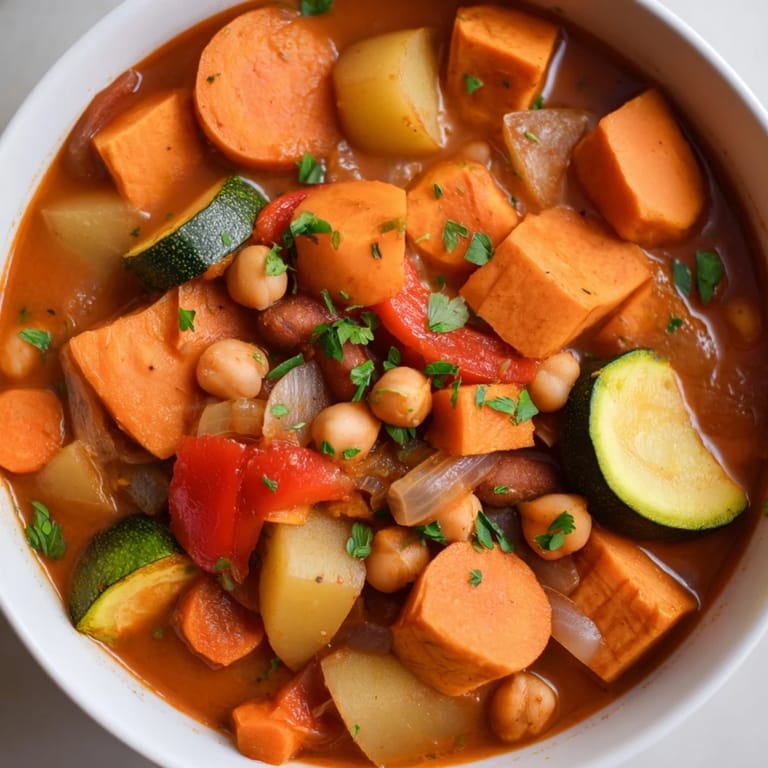
Save There's something about the smell of sweet potatoes caramelizing in olive oil that makes a kitchen feel instantly alive. I discovered this stew on a grey October afternoon when I had almost nothing in my pantry except root vegetables, canned beans, and a stubborn determination not to order takeout. What emerged was this gloriously humble pot of warmth—so hearty and nourishing that it became my go-to remedy for both tired evenings and the kind of hunger that needs real food.
I made this for a dinner party once where I realized fifteen minutes before guests arrived that my main plan had fallen apart. I threw together this stew in what felt like controlled chaos, and by the time everyone sat down, the kitchen smelled so good that someone asked for the recipe before tasting a single bite. That's when I knew this wasn't just my comfort food—it was something worth sharing.
Ingredients
- Sweet potatoes: They're the anchor here, turning buttery and sweet as they soften, creating a natural creaminess without any cream.
- Yukon Gold or russet potatoes: These give the stew body and help thicken the broth as they break down slightly.
- Carrots and celery: The aromatic foundation that builds flavor from the first sauté.
- Onion and garlic: Don't skip the good sauté—these create the base layer of taste everything else builds on.
- Red bell pepper and zucchini: Color and texture that keep each spoonful interesting.
- Cannellini or kidney beans: Protein that feels substantial without heaviness.
- Chickpeas: They add a second note of earthiness and help make the stew feel complete.
- Diced tomatoes: The acidic counterpoint that brightens the whole pot.
- Vegetable broth: Use quality broth if you can—it's the difference between good and memorable.
- Tomato paste: Two tablespoons of concentrated flavor that you stir in early for depth.
- Smoked paprika, thyme, cumin: This trio creates warmth without being aggressive.
- Olive oil: The silent partner in every good stew.
Tired of Takeout? 🥡
Get 10 meals you can make faster than delivery arrives. Seriously.
One email. No spam. Unsubscribe anytime.
Instructions
- Build your base:
- Heat olive oil in a large pot and sauté onion, celery, and carrot for about five minutes until they soften and start to turn golden. You're building the aromatic foundation here—listen for the sizzle that means things are developing.
- Layer in the next layer:
- Add garlic, red bell pepper, and zucchini, cooking for three more minutes until the garlic blooms and the whole pot smells alive. This is when it starts to feel like real cooking.
- Toast your spices:
- Throw in the sweet potatoes, regular potatoes, smoked paprika, thyme, cumin, pepper, and salt, then sauté for two minutes. You'll notice the spices release their oils and the smell deepens—that's when you know they're awake.
- Build the broth:
- Stir in tomato paste first, let it sit for a moment, then add your diced tomatoes, vegetable broth, and bay leaf. Bring everything to a boil.
- The long simmer:
- Lower the heat, cover the pot, and let it bubble gently for twenty minutes until the potatoes are tender but not falling apart. Resist the urge to rush this—the stew is consolidating flavors.
- Add the beans:
- Stir in your drained cannellini beans and chickpeas, then simmer uncovered for another ten to fifteen minutes. The stew will thicken slightly as the broth reduces, and the beans will absorb all that tomato goodness.
- Finish with spinach:
- If you're using baby spinach, stir it in now and cook for just two minutes until it wilts into the pot.
- Taste and adjust:
- Remove the bay leaf and taste. Add more salt, a squeeze of lemon, or a pinch of heat—whatever your instinct tells you.
 Save
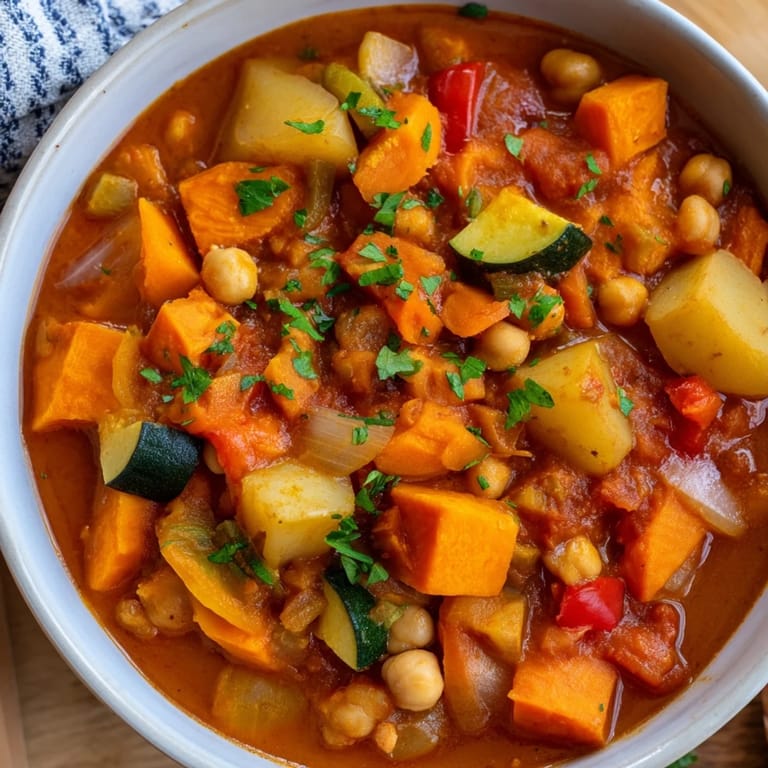
Save There's a moment in the kitchen when the house fills with the smell of simmering vegetables and spice, and you know that whatever comes out of that pot is going to be good. This stew taught me that simplicity and care aren't the same thing—sometimes the most nourishing meals are the ones built from what you have and the attention you give them.
Why This Stew Works
The genius of this recipe is that it respects the vegetables instead of fighting them. Sweet potatoes bring natural sweetness that plays against the tomato's brightness, while the beans add protein and make the whole thing feel grounding. The spices are restrained enough that they enhance rather than shout. When you sit down with a bowl of this, you're eating something honest.
Flexibility and Substitutions
I've made this stew in winter with root vegetables from a farmer's market bag, and in late summer with zucchini and tomatoes at their peak. The structure stays the same, but the character shifts. Swap the chickpeas for lentils if that's what you have. Use spinach, kale, or skip the greens entirely. The recipe bends without breaking.
Serving and Storage
This stew tastes even better the next day, once everything has had time to get to know each other. Ladle it into bowls and finish with fresh parsley if you want brightness, or serve with lemon wedges so everyone can adjust the acidity to their taste. For a heartier meal, serve it over rice or with crusty bread alongside.
- Store leftovers in an airtight container for up to four days, or freeze for up to three months.
- If you're meal prepping, this actually improves in the fridge as the flavors deepen.
- Reheat gently on the stovetop with a splash of broth to loosen it if needed.
 Save
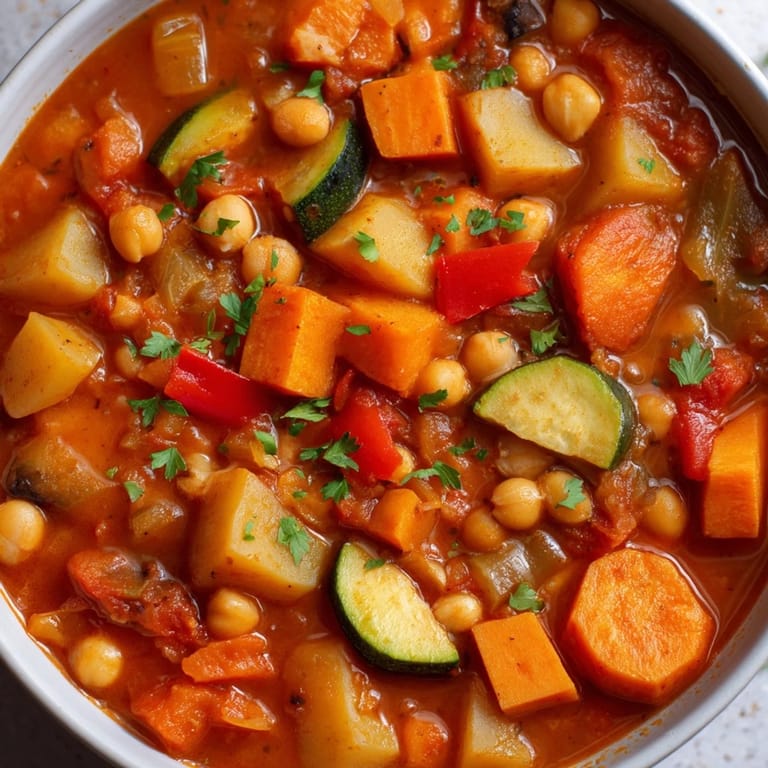
Save This stew became my answer to the question of how to eat well on ordinary nights. It's the kind of food that tastes like someone took care in making it, even when it was actually pretty simple.
Recipe FAQ
- → What potatoes can I use for this stew?
Sweet potatoes and Yukon Gold or russet potatoes work well, offering a balance of sweetness and creaminess.
- → Can I substitute the beans?
Yes, lentils or other seasonal legumes can be used instead for variety and texture.
- → How can I make the stew spicier?
Add a ½ teaspoon of chili flakes during cooking to introduce a gentle heat.
- → Is it possible to prepare this stew in advance?
Absolutely. The flavors deepen when rested, making it ideal for meal prep and enjoying later.
- → What dishes pair well with this stew?
Serving it with crusty bread or over rice enhances the meal and adds heartiness.