 Save
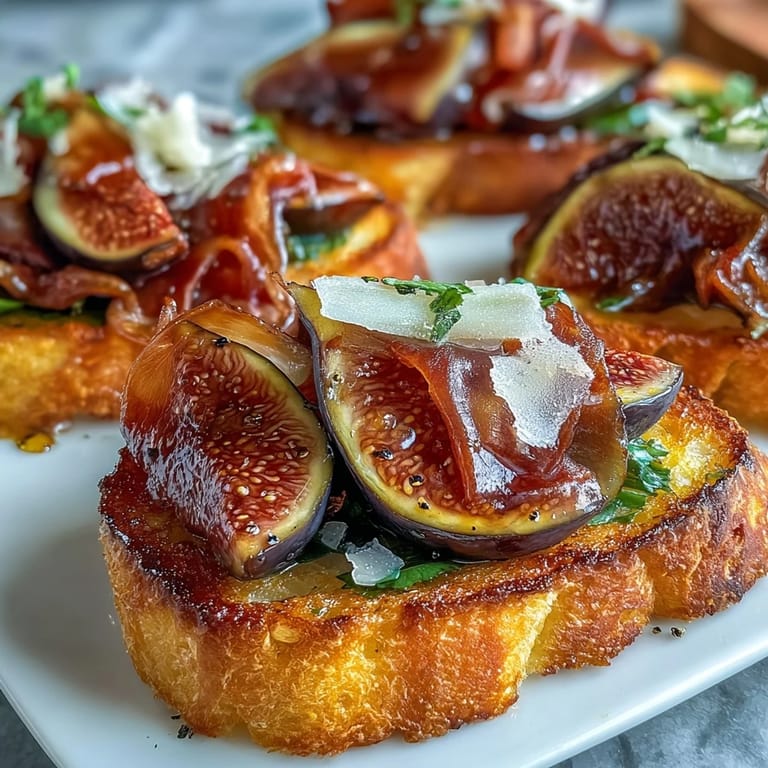
Save My neighbor Marco brought over a wooden board of these one summer evening, and I watched his hands move with such ease—brushing oil, arranging prosciutto like he was composing a painting. The way the salty ham caught against the sweetness of the figs made me stop mid-conversation, genuinely stunned by something so simple. That night, I decided these crostini were worth learning, and they've been my secret weapon at gatherings ever since.
I made these for a small dinner party last autumn when my garden had just stopped producing, and I remember standing in the kitchen feeling a bit defeated until I spotted fresh figs at the market. That moment reminded me how sometimes the best meals come together not from planning perfectly, but from working with what shows up. Everyone ate these three at a time, barely pausing for conversation.
Ingredients
- Baguette or rustic Italian bread, 8 slices: Look for bread with some texture and a good crust—this gives you that satisfying snap when you toast it.
- Extra-virgin olive oil, 2 tbsp: Don't skip quality here; the oil's fruity notes matter when everything else is so minimal.
- Prosciutto, 8 thin slices: Ask the deli counter to slice it thin; thick slices overwhelm the delicate figs.
- Fresh figs, 4 whole ones: Ripe figs are non-negotiable—underripe ones taste mealy and defeat the whole purpose.
- Soft goat cheese or ricotta, 2 oz (optional): This creates a creamy anchor that lets the other flavors shine without competing.
- Freshly ground black pepper, to taste: Freshly ground makes an actual difference; pre-ground pepper tastes tired here.
- Fresh thyme leaves or arugula for garnish: A small handful of either adds brightness and keeps things from feeling too heavy.
- Honey, 1-2 tsp (optional): A whisper of honey amplifies the fig's natural sweetness without making it dessert.
Tired of Takeout? 🥡
Get 10 meals you can make faster than delivery arrives. Seriously.
One email. No spam. Unsubscribe anytime.
Instructions
- Heat your oven and prep the bread:
- Set the oven to 400°F and arrange your bread slices on a baking sheet. Brush both sides lightly with olive oil—you want them kissed with oil, not soaked.
- Toast until golden and crisp:
- Slide them in for 8–10 minutes, turning halfway through so both sides brown evenly. You're looking for that moment when they smell toasted but not burned, and they should feel crunchy when you pick one up.
- Build your crostini:
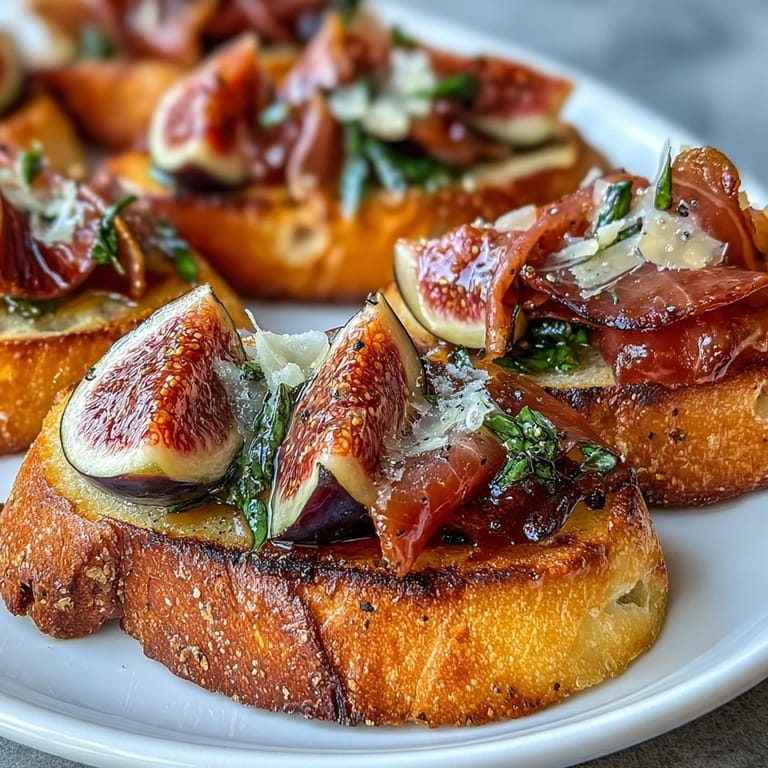
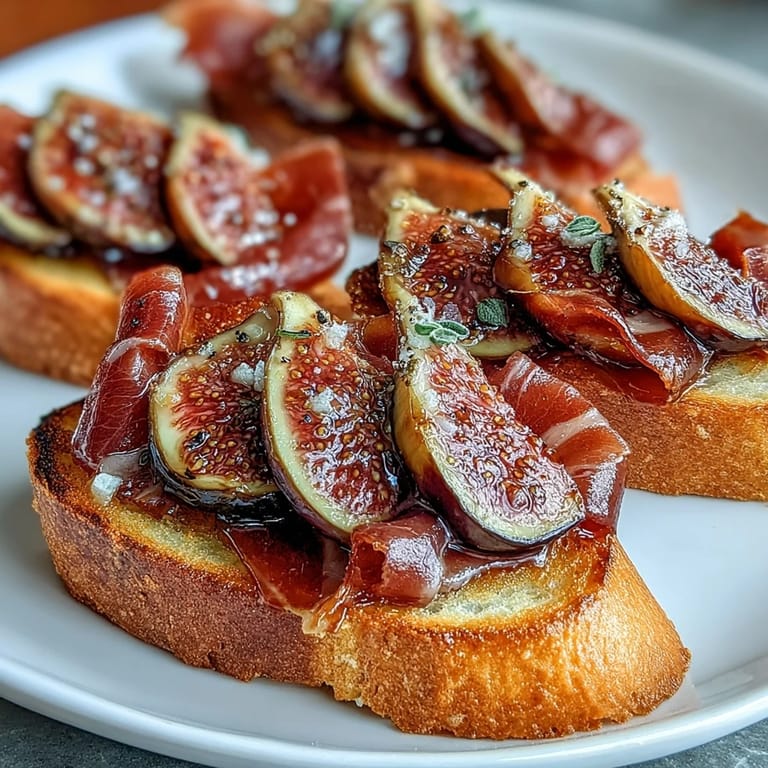
- If using cheese, spread a thin layer on each toasted slice while it's still warm—the warmth helps it soften naturally. Then layer your prosciutto and fig slices on top of each one.
- Season and finish:
- Crack fresh black pepper over the top, add your choice of thyme or arugula, and drizzle with honey if you're going that direction. Serve right away so everything stays crispy.
 Save
Save My daughter once asked why these were fancy, since they're so easy, and I realized they're only fancy because we decide they are. There's something deeply human about arranging beautiful ingredients on bread and offering them to people you care about—no complicated techniques required.
When Figs Aren't Available
Winter threw me a curveball once, and I swapped in thinly sliced ripe pear instead of figs. The earthiness changed the whole vibe slightly, leaning more savory, but it was wonderful in a different way. You could also try thin apple slices or even roasted grapes if you're feeling adventurous—the key is something that has juice and a little sweetness to play against the salt.
Building Flavor Layers
These crostini work because nothing competes—each element has its own job. The bread is your structure, the prosciutto brings salt and umami, the fig brings sweetness and a soft texture, and the cheese (if you use it) acts like a gentle bridge between everything else. This is restraint in action, and it's what makes the dish feel polished rather than jumbled.
Making Them Your Own
Once you nail the basic formula, you have permission to play. I've added crispy walnuts for crunch, swapped the goat cheese for creamy burrata on occasion, and even smeared a tiny bit of fig jam instead of fresh figs when I needed to plan ahead. The beauty of crostini is they're a template, not a law.
- Toast extra bread and store it in an airtight container for up to three days if you want to get ahead on prep.
- If you're serving these at a party, assemble everything except the figs, then add them right before guests arrive to keep everything crisp.
- A small drizzle of aged balsamic can replace or accompany the honey if you want to go savory-sweet instead of just sweet.
 Save
Save These crostini remind me that good food doesn't whisper—it talks to you clearly, with ingredients that taste like themselves. Make them once, and you'll find yourself reaching for them again whenever you want something that tastes both effortless and elegant.
Recipe FAQ
- → What bread works best for these crostini?
Baguette or rustic Italian bread slices are ideal for achieving a crispy yet tender base.
- → Can I substitute figs if they're unavailable?
Ripe pears make a lovely alternative, providing a similarly sweet and juicy texture.
- → Is it necessary to use goat cheese?
The cheese is optional but adds a creamy dimension. Ricotta can be used as a milder substitute.
- → How should I garnish for best flavor?
Fresh thyme leaves or arugula add a bright herbal note, complementing the rich prosciutto.
- → What drinks pair well with this appetizer?
A crisp Prosecco or Sauvignon Blanc enhances the vibrant flavors and balances the saltiness.