 Save
Save I discovered the magic of checkerboard bites at a summer garden party years ago, when a friend arrived with a stunning platter that looked almost too beautiful to eat. The alternating squares of deep burgundy roast beef and pale Swiss cheese caught the afternoon sunlight like an edible mosaic. I remember standing there, admiring it far longer than I should have, before realizing how brilliantly simple it was to make. Now whenever I need an appetizer that feels special without demanding hours in the kitchen, this is what I reach for.
I'll never forget bringing this to my first potluck dinner after moving to a new city. I was nervous about fitting in, but watching people's faces light up when they saw that checkerboard pattern—and tasted how good something so simple could be—made me feel like I belonged. That platter became my signature.
Ingredients
- Smoked turkey breast, 8 slices cut into 1-inch squares: This is your lighter, subtly smoky player in the game. The flavor is delicate enough not to overpower, but distinctive enough to matter. I always look for the thicker-cut deli slices because they hold their shape better when you're arranging them.
- Roast beef, 8 slices cut into 1-inch squares: Here's where you get that gorgeous deep color and a richer, beefier presence. Ask the deli counter for medium thickness—not paper-thin, not too thick. That's your key to easy cutting and professional-looking squares.
- Swiss cheese, 8 slices cut into 1-inch squares: The pale, slightly nutty squares that contrast beautifully with the roast beef. Swiss cheese has just enough structure that it won't slide around as you arrange.
- Sharp cheddar cheese, 8 slices cut into 1-inch squares: This gives you that golden-orange hue that pops against the turkey. Sharp cheddar holds its flavor and doesn't get lost next to assertive deli meats.
- Fresh chives, finely chopped: A whisper of onion brightness scattered across the top. This small gesture elevates it from simple to intentional.
- Cracked black pepper: Don't skip this—the flecks of pepper catch the light and add visual texture to your creation.
Tired of Takeout? 🥡
Get 10 meals you can make faster than delivery arrives. Seriously.
One email. No spam. Unsubscribe anytime.
Instructions
- Gather your canvas:
- Lay out your parchment paper or serving board in front of you. This is your stage. If you're using a board you love, you don't need the parchment—the board itself becomes part of the presentation.
- Cut with intention:
- Take your time cutting each slice into 1-inch squares. You want them roughly even so the checkerboard reads as intentional, not chaotic. A sharp knife makes this effortless. Dull knives tear at the deli meat fibers.
- Lay your first square:
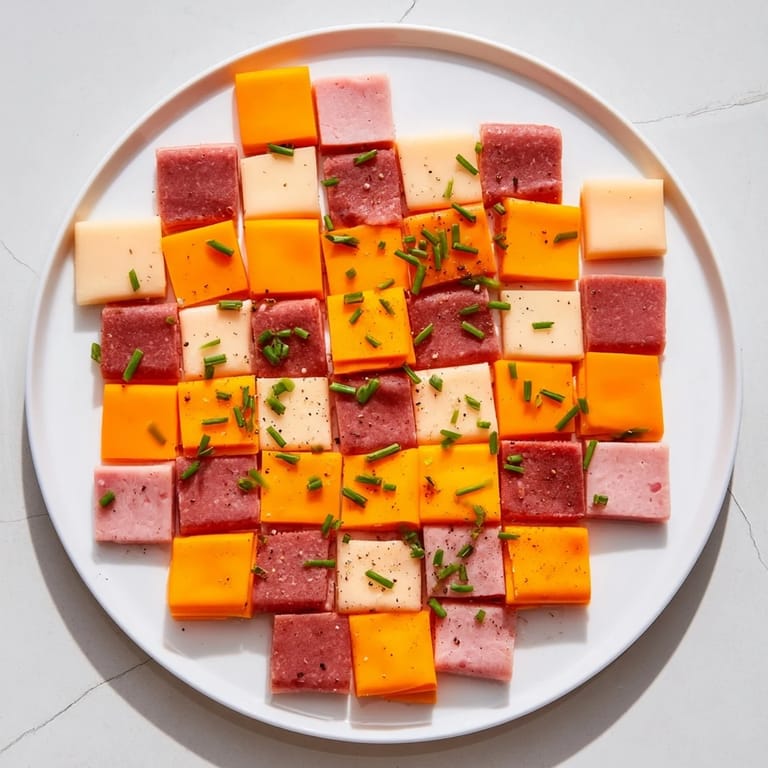
- Start in the top left corner with a piece of smoked turkey. Then move right to cheddar, then turkey, then cheddar. This first row sets the visual rhythm for everything that follows.
- Build row by row:
- Move down to the second row. Now you'll start with cheddar instead, alternating with roast beef and Swiss cheese. The pattern should look like you're playing checkers with food—opposite colors dancing across the board.
- Complete your grid:
- Continue this alternating pattern until you have your full 4x4 grid. Step back and look at it. Really look at it. This is the moment where it stops being ingredients and becomes something.
- Press gently to secure:
- Run your fingers lightly over the squares, pressing adjacent pieces together just enough so they hold if you need to transport the board. If you're moving it, a tiny, barely-there dab of honey or smooth mustard underneath each square acts like edible glue.
- Finish and chill:
- Scatter the finely chopped chives across the top and finish with a generous grind of cracked black pepper. If you have time, cover it loosely and let it chill for even thirty minutes. Cold cheese and meat are infinitely better than room temperature.
 Save
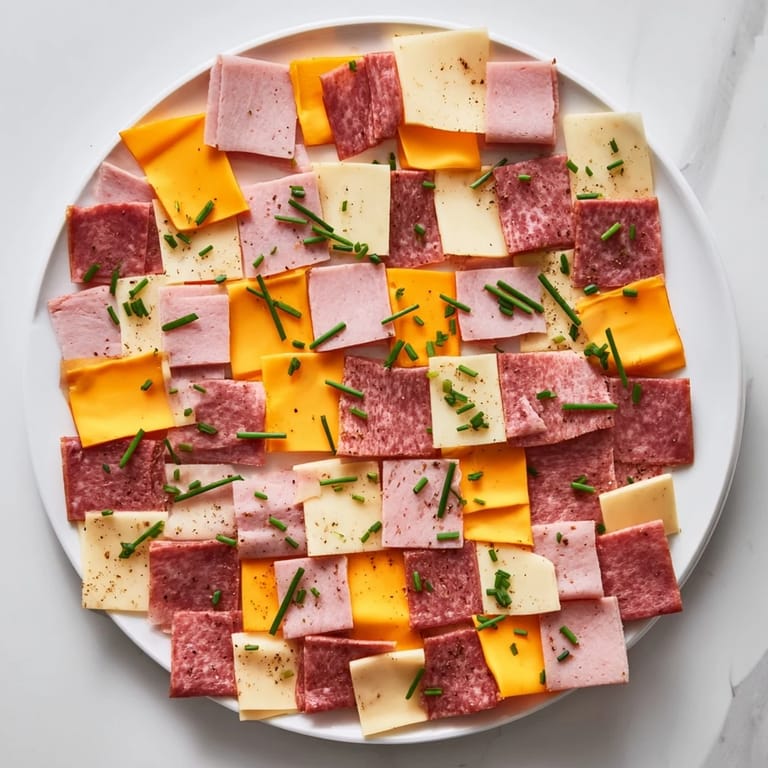
Save There was a moment at a child's birthday party where a three-year-old pointed at the checkerboard and said, 'It's so pretty I want to keep it forever.' Their parent laughed and reminded them it was meant to be eaten, but I understood that impulse completely. That's when I realized this appetizer isn't just about taste—it's about making people pause and notice the care in something small.
The Art of the Pattern
The beauty of a checkerboard is in its mathematics and symmetry. When you're arranging these squares, you're not just making an appetizer—you're creating visual rhythm. The alternating colors trick your eye into seeing something more complex and intentional than it actually is. This is food styling without trying. Once you've made one checkerboard, you'll find yourself wanting to try variations: perhaps prosciutto with creamy mozzarella, or spicy salami with mild Havarti. Each combination tells a different story through color and flavor.
Serving and Pairings
These bites exist in that perfect space between casual and elegant. Set them out at a picnic on a wooden board and they feel rustic and friendly. Arrange the same squares on a marble platter and suddenly they feel like a sophisticated starter for a dinner party. The magic is in the setting, not in reinventing the wheel. I always serve them with small toothpicks—it's the little gesture that makes people feel cared for. As for what to drink alongside them, sparkling wine highlights the salty, savory notes beautifully. On a hot day, fresh lemonade or iced tea brings cooling brightness. The key is something with acidity or effervescence to cleanse the richness of the cheese and meat.
Variations and Flexibility
One of my favorite things about this recipe is how adaptable it is. Once you understand the principle—contrast is everything, arrangement matters, simplicity is strength—you can play. For vegetarian guests, roasted beet squares and cucumber slices create a stunning purple-and-green checkerboard. I've also made versions with salami and provolone, or smoked salmon and cream cheese spread on thin cucumber rounds. The framework stays the same; only the colors change. And if you're making this for a smaller gathering, don't feel obligated to commit to a full 4x4 grid. A 2x2 uses just four pieces total and makes a charming individual appetizer.
- Cut all your pieces before you start arranging—mise en place for appetizers prevents scrambling at the last minute
- If transporting to an event, keep the board uncovered for as long as possible so the colors stay vibrant and nothing sweats under plastic wrap
- Room temperature cheese tastes better than cold cheese, but cold cheese holds its shape better—find your preference and let it sit out accordingly before serving
 Save
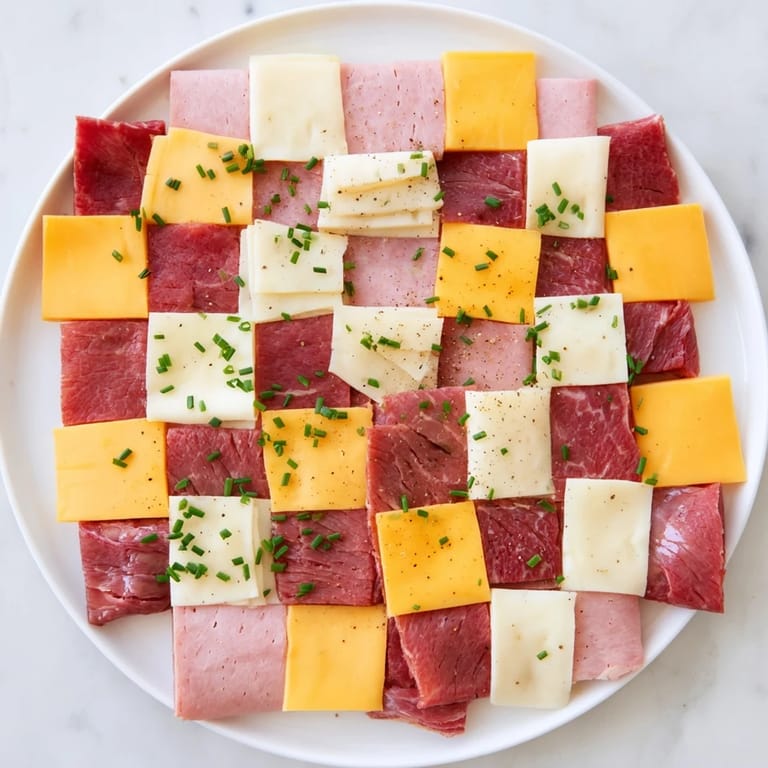
Save Every time I make these, I'm reminded that impressive entertaining doesn't require complexity—just thoughtfulness and clean ingredients arranged with intention. They taste like friendship tastes, if friendship were edible.
Recipe FAQ
- → How do you maintain the checkerboard pattern?
Arrange 1-inch squares of contrasting meats and cheeses in a 4x4 grid, alternating types both row-wise and column-wise.
- → Can these bites be made ahead?
Yes, prepare and assemble the checkerboard bites in advance, then store chilled until serving for best freshness.
- → Are there vegetarian alternatives?
Replace meats with roasted vegetables like beet and cucumber slices to keep the contrasting colors and textures.
- → What ingredients enhance the flavor?
Fresh chives and cracked black pepper sprinkled on top add aroma and a gentle spice contrast to the meats and cheeses.
- → How should these bites be served?
Serve chilled or at room temperature on a platter, optionally with toothpicks for easy handling at parties.
- → What are possible ingredient swaps?
Try combinations such as prosciutto and mozzarella or salami and Havarti for varied taste and texture.