 Save
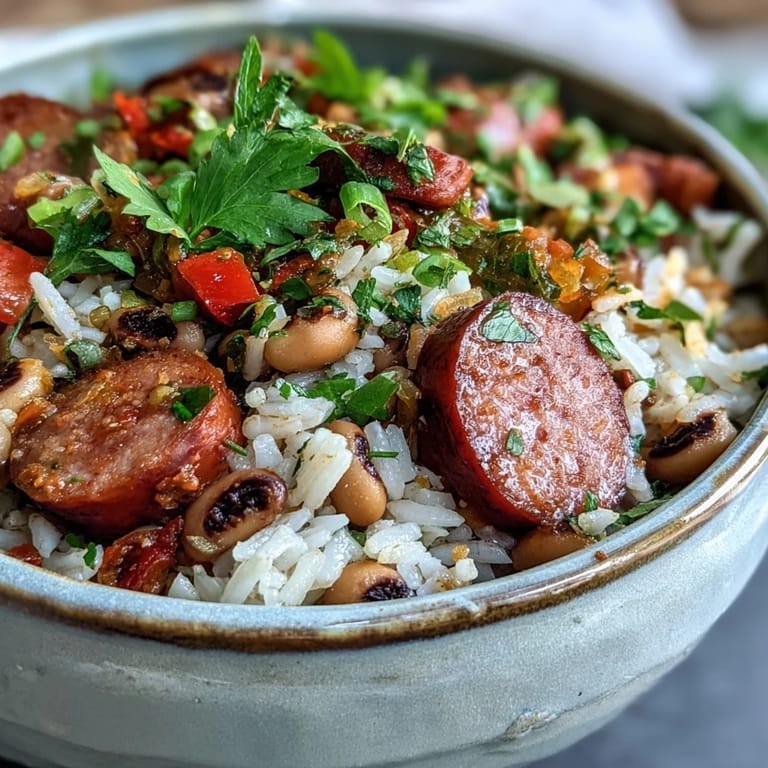
Save There's something about the smell of smoked sausage hitting hot oil that instantly transports me to a humid New Orleans evening, even though I was standing in my own kitchen in the middle of winter. My neighbor had just returned from a food festival down south and wouldn't stop talking about real jambalaya, the kind where everything sings together instead of existing as separate ingredients. I decided to prove it wasn't magic, just timing and the right spices, so I built this one-pot version one Saturday afternoon when the kitchen felt like the only warm place in the house.
I made this for a small dinner party last fall, and watching my guests go quiet when they tasted it—that suspended moment before someone says "wait, you made this?"—reminded me why I cook in the first place. One friend actually asked for the recipe before finishing her bowl, which felt like the highest compliment possible.
Ingredients
- Smoked sausage (340 g/12 oz), sliced: Andouille or kielbasa carries the entire flavor profile, so don't skimp or use regular sausage; the smokiness is what makes people wonder what your secret is.
- Onion (1 medium), diced: The foundation of the holy trinity of Cajun cooking, sweet and mild when cooked down properly.
- Celery (2 stalks), diced: Often overlooked, but it adds a subtle earthiness that rounds out the spice blend.
- Red and green bell peppers (1 each), diced: They soften into the rice and provide natural sweetness that balances the heat.
- Garlic (3 cloves), minced: Don't be tempted to skip this; it's what makes people ask if you added garlic when you absolutely did.
- Black-eyed peas (1 can, 425 g/15 oz), drained and rinsed: These absorb the spiced broth and add a subtle, slightly earthy flavor that makes the dish feel complete.
- Long-grain white rice (300 g/1½ cups): Use decent rice that stays separate; cheap rice gets mushy and ruins the whole texture.
- Chicken broth (800 ml/3⅓ cups), low-sodium: Low-sodium lets the spices shine instead of fighting background salt.
- Diced tomatoes with juices (1 can, 400 g/14 oz): The acid brightens everything and prevents the dish from tasting too heavy.
- Olive oil (2 tbsp): Just enough to brown the sausage and coat the rice without making it greasy.
- Cajun seasoning (1½ tsp): This is your shortcut to authentic flavor; I use a good quality blend with garlic, paprika, and cayenne already mixed in.
- Smoked paprika (1 tsp): Adds depth and that crucial smoky note that lingers on your palate.
- Dried thyme (½ tsp): Herbaceous and subtle, it plays nice with everything without demanding attention.
- Dried oregano (½ tsp): Rounds out the herb profile with a slightly Mediterranean undertone.
- Bay leaf (1): Remove it before serving, but it whispers flavor into the broth as everything simmers.
- Salt (½ tsp) and black pepper (¼ tsp): Taste as you go because store-bought sausage varies wildly in saltiness.
- Cayenne pepper (¼ tsp, optional): Only if you want genuine heat; otherwise, the Cajun seasoning has enough kick.
- Spring onions (2), sliced, and fresh parsley (2 tbsp), chopped: These garnishes add fresh brightness that cuts through the richness right before you eat.
Tired of Takeout? 🥡
Get 10 meals you can make faster than delivery arrives. Seriously.
One email. No spam. Unsubscribe anytime.
Instructions
- Brown the sausage:
- Heat olive oil in a large Dutch oven or heavy pot over medium heat, then add the sliced sausage. Let it sit for a moment before stirring—you want those edges to caramelize and turn dark golden, which takes about 4 to 5 minutes. This step is where the deep, smoky flavor starts, so don't rush it.
- Cook the holy trinity:
- Add the diced onion, celery, and both bell peppers to the pot with the sausage. Stir occasionally for about 5 minutes until the vegetables soften and the onions become translucent. The kitchen will smell incredible at this point, and you'll know they're ready when you can see the sausage pieces sitting in a bed of soft vegetables.
- Wake up the garlic:
- Stir in the minced garlic and cook for just 1 minute, stirring constantly so it doesn't burn. One minute is all you need—any longer and it turns bitter instead of fragrant.
- Toast the rice:
- Add the rice to the pot and stir it around for a minute or two, coating each grain in the oil and vegetable mixture. This small step gives the rice a subtle toasted flavor that makes people wonder if you added butter.
- Build the broth:
- Pour in the chicken broth and diced tomatoes with their juices, then add the black-eyed peas. Sprinkle in the Cajun seasoning, smoked paprika, thyme, oregano, bay leaf, salt, black pepper, and cayenne if you're using it. Stir everything together so the spices distribute evenly and nothing settles at the bottom.
- Simmer until tender:
- Bring the mixture to a boil—you'll see big bubbles breaking the surface—then immediately reduce the heat to low. Cover the pot with a lid and let it simmer quietly for 20 to 25 minutes, checking only once to make sure nothing is sticking to the bottom. The rice is done when it's tender and the liquid has been absorbed.
- Rest and finish:
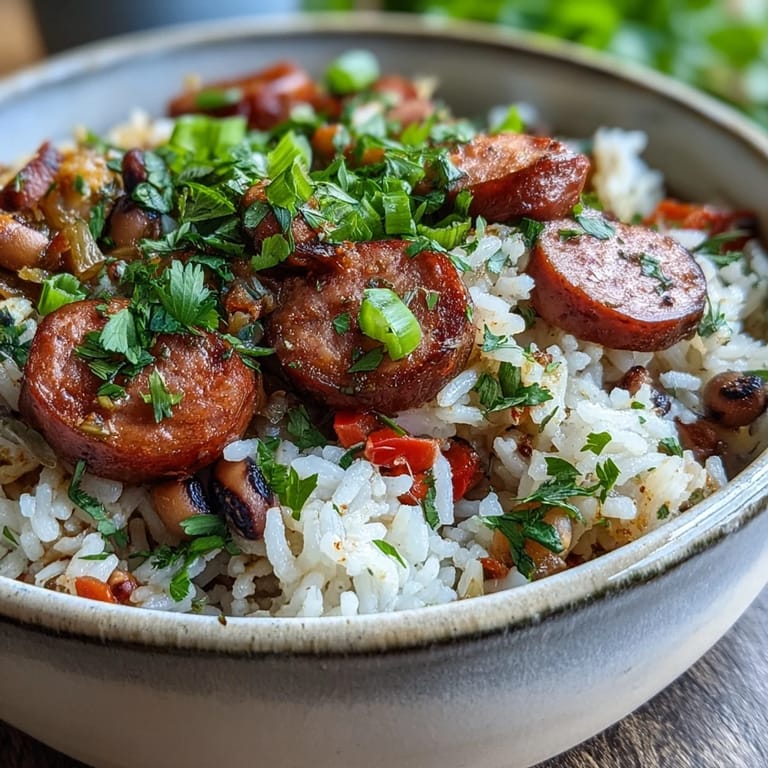
- Remove the pot from heat and let it stand, covered, for 5 minutes. This resting period lets the rice finish absorbing any remaining moisture and calms everything down into one cohesive dish. Discard the bay leaf, fluff everything gently with a fork, then scatter the sliced spring onions and fresh parsley on top right before serving.
 Save
Save I learned something that day making this for the dinner party: food that feels like it took hours but actually came together in one pot has a way of making people feel genuinely cared for. They couldn't quite put their fingers on why it felt special, and I wasn't about to ruin the mystery by mentioning it was done in an hour.
Why Smoked Sausage Matters
Don't think of sausage as optional seasoning—it's the star player here, and everything else exists to support it. Andouille has that distinctive smoky, slightly spicy character that defines real Cajun cooking, and even a decent kielbasa from the grocery store will deliver more flavor than any amount of spice blending ever could. The fat renders into the oil as it browns, creating a flavor base that coats every grain of rice by the end of cooking.
The Black-Eyed Pea Secret
These beans are traditional in Southern cooking for a reason beyond superstition—they have an almost creamy texture when cooked and a subtle earthiness that makes the dish feel more substantial without weighing you down. Canned ones work perfectly here; there's no need for the extra cooking time of dried beans, and they soak up the spiced broth without falling apart. If you can't find them, substitute pinto beans or kidney beans, but the flavor profile shifts slightly.
Spice Balance and Heat
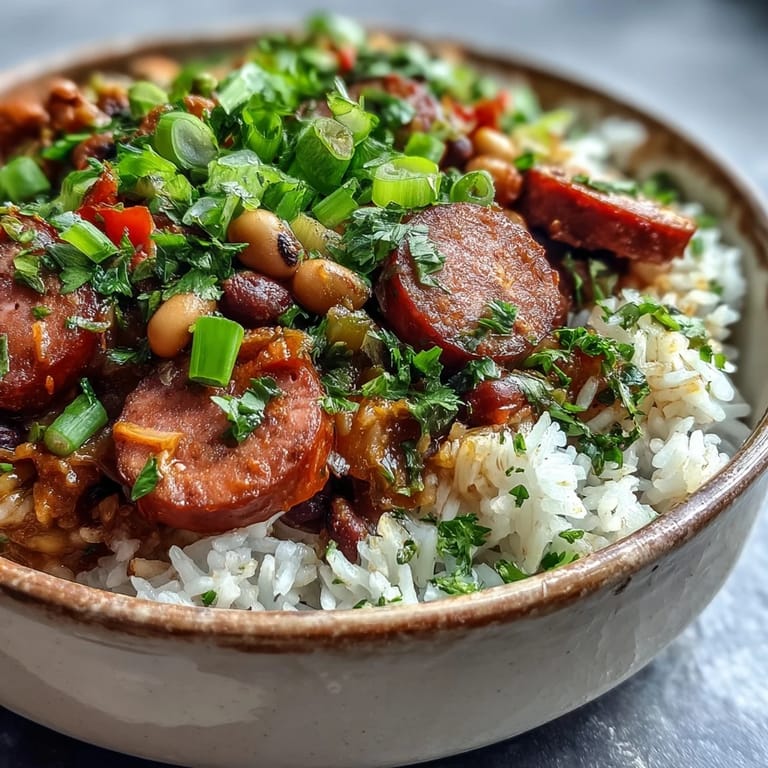
The beauty of this jambalaya is that it has real flavor without punishing heat, though you can absolutely adjust it to match your preferences. Start with the Cajun seasoning and optional cayenne as written, taste a spoonful once everything's cooked, and remember that you can always add heat but you can't take it away. I've served this to people who think spice means ketchup and to people who keep hot sauce in their pocket, and a simple bowl with garnishes on the side lets everyone customize without drama.
- Taste the broth before adding the rice if you want to dial in the spice level early, when adjustments are easiest.
- Fresh cayenne or a pinch of smoked chili powder works if you're out of cayenne pepper and want more heat.
- Serve with hot sauce bottles nearby so guests can add more without you feeling like you didn't make it spicy enough.
 Save
Save This jambalaya proves that impressive food doesn't require complicated technique, just respect for good ingredients and patience to let everything develop together. Make it once and you'll make it again, probably on nights when you need something that feels like comfort but tastes like you tried.
Recipe FAQ
- → What makes black-eyed pea jambalaya different from traditional jambalaya?
Black-eyed pea jambalaya incorporates legumes for added protein and texture, while traditional jambalaya typically relies on meat and rice. The black-eyed peas also contribute a creamy element that complements the smoky sausage and spices.
- → Can I make this vegetarian?
Yes, simply omit the smoked sausage and substitute vegetable broth for chicken broth. Consider adding extra vegetables like mushrooms or additional beans to maintain heartiness and protein content.
- → How spicy is this jambalaya?
The spice level is moderate and adjustable. The Cajun seasoning provides warmth, while the optional cayenne pepper lets you control the heat. You can easily reduce or increase the spices to suit your preference.
- → What type of rice works best for jambalaya?
Long-grain white rice is ideal because it stays fluffy and separate during cooking. Avoid using short-grain or Arborio rice, which becomes too sticky and creamy for this dish.
- → How should I store leftovers?
Store cooled jambalaya in an airtight container in the refrigerator for up to 4 days. Reheat gently on the stovetop with a splash of broth or water to restore moisture.
- → Can I use dried black-eyed peas instead of canned?
Yes, but you'll need to cook them separately first. Soak dried peas overnight, then simmer until tender before adding them to the jambalaya during the last 20 minutes of cooking.