 Save
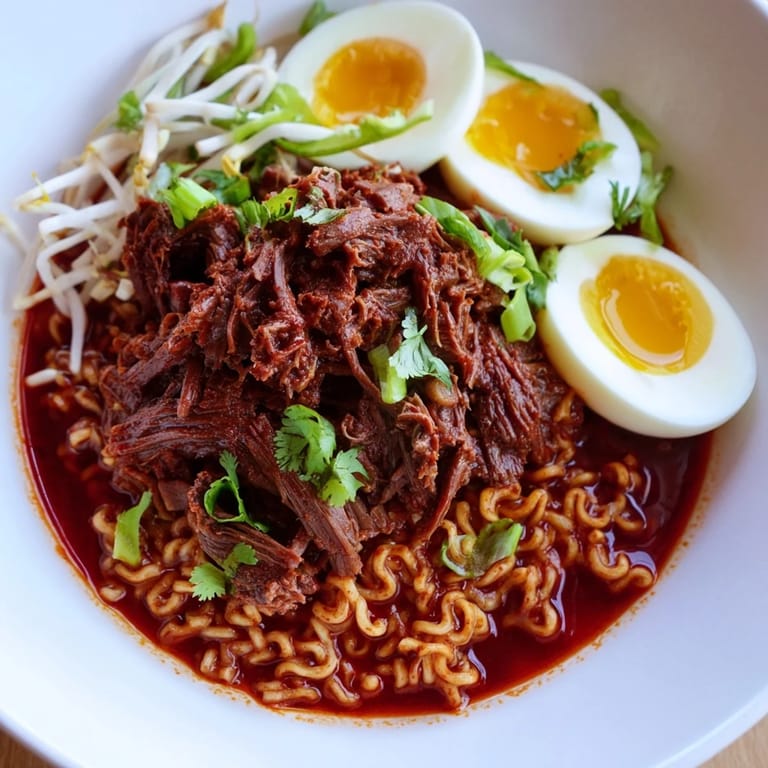
Save I discovered birria ramen at a tiny fusion pop-up in late autumn, where the kitchen smelled like charred chilies and soy sauce mingling in a way that shouldn't have worked but absolutely did. The bowl arrived steaming, this wild collision of Mexican spice and Japanese noodles that made me lean back in my chair and just stare at it for a moment. That night I decided to recreate it at home, less out of ambition and more out of a stubborn need to understand how those flavors could possibly be so right together. Three hours of simmering beef, a blender full of toasted chilies, and suddenly my kitchen felt like it was hosting an adventure. Now it's become the kind of dish I make when I want to feel like I'm cooking something nobody else is.
I made this for my sister one rainy weekend, and she called me three days later asking if I could teach her the technique because her partner wouldn't stop thinking about it. Watching her wrap those noodles around her fork, eyes closed while she slurped, reminded me why I love cooking fusion dishes—they surprise people in the best way. The kitchen was warm and steamy, and for those few hours, it felt like we were doing something more interesting than just dinner.
Ingredients
- Beef chuck roast, 2 lbs: This cut breaks down beautifully over hours, giving you meat that shreds without effort and infuses the broth with deep, savory richness.
- Dried guajillo and ancho chilies: Toasting these first wakes up their complexity—they'll smell incredible and taste way more nuanced than if you skip that step.
- Chipotle in adobo, 1: Just one is enough to add a gentle smoky depth without overwhelming the other spices.
- Cumin, cinnamon, and cloves: These three together create that warm, almost mysterious backbone that makes people ask what's in the broth.
- Apple cider vinegar, 2 tbsp: This brightens everything and keeps the broth from tasting one-note, no matter how long it simmers.
- Ramen noodles, 4 packs: Fresh is prettier, but instant works just fine—just discard those seasoning packets so they don't muddy your carefully built broth.
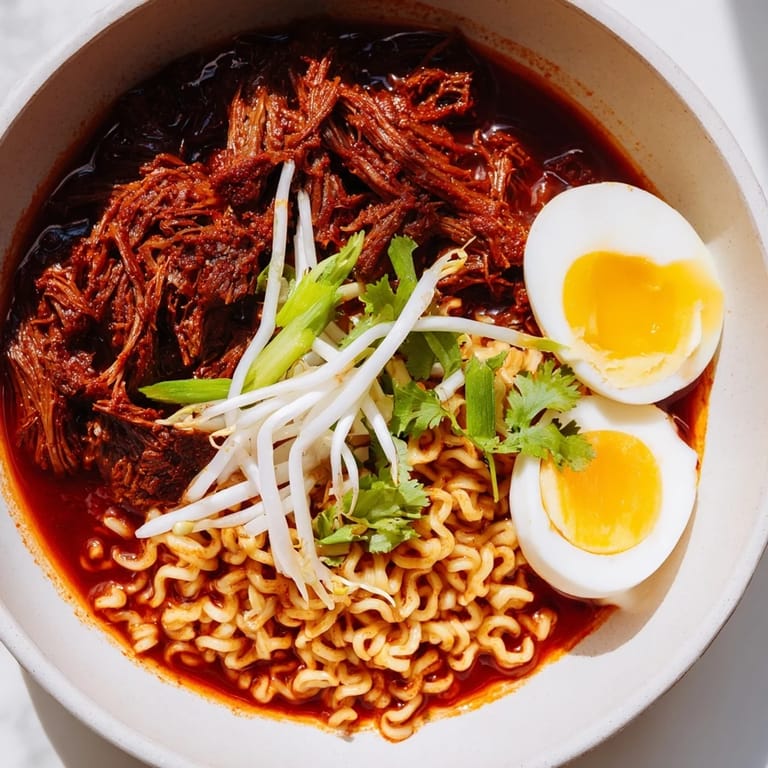
- Soft-boiled eggs and fresh toppings: These aren't garnish; they're actually what make each spoonful feel complete and alive.
Tired of Takeout? 🥡
Get 10 meals you can make faster than delivery arrives. Seriously.
One email. No spam. Unsubscribe anytime.
Instructions
- Toast and soak your chilies:
- Place your guajillo and ancho chilies in a dry skillet over medium heat for just 1–2 minutes, moving them gently so they don't burn—you'll smell the moment they wake up. Cover them with hot water and let them soften for 10 minutes while you prep everything else.
- Build your chile paste:
- Blend the soaked chilies with the chipotle, onion, garlic, tomatoes, vinegar, and all your spices into something smooth and brick-red. Taste it if you're brave—it'll be intense and fragrant, which is exactly right.
- Brown your beef:
- Season the chunks generously and sear them in a hot Dutch oven with a splash of oil, working in batches so you actually get color on each piece. This takes patience, but you'll taste the difference.
- Simmer low and slow:
- Pour your chile paste and beef broth into the pot with the beef, add bay leaves, and cover. Cook on low for 2.5–3 hours until the meat falls apart when you poke it with a fork—this is where the magic happens and your kitchen becomes completely irresistible.
- Shred and strain:
- Remove the beef and shred it with two forks, then skim any excess fat from the surface of the broth and discard the bay leaves. You'll have this silky, spiced liquid that tastes like hours of work but only took patience.
- Build your ramen broth:
- In a separate pot, combine your strained birria broth with chicken broth, soy sauce, and sesame oil, then bring it to a simmer. This is where the Mexican and Japanese sides really meet.
- Cook and assemble:
- Cook your ramen noodles, divide them among bowls, and ladle that gorgeous broth over top. Layer in the shredded beef, then all your toppings—eggs, scallions, sprouts, cilantro, lime wedges, and whatever else calls to you.
 Save
Save The first time I served this to someone who said they weren't really into fusion food, they went back for seconds and asked for the recipe before they even finished. There's something about a bowl that warm, that customizable, that tastes like you genuinely put care into it—it stops people from overthinking and just lets them enjoy the moment.
The Art of Layering Flavors
What makes this dish work is understanding that you're not just mixing two cuisines—you're building depth in stages. The toasted chilies bring earthiness, the cinnamon and cloves add warmth without being sweet, the vinegar cuts through the richness, and the soy sauce ties everything together in a way that feels inevitable once you taste it. Each component has a job, and when you respect that, the broth becomes something that tastes like it's been simmering for a day even though it hasn't.
Why Soft-Boiled Eggs Matter More Than You Think
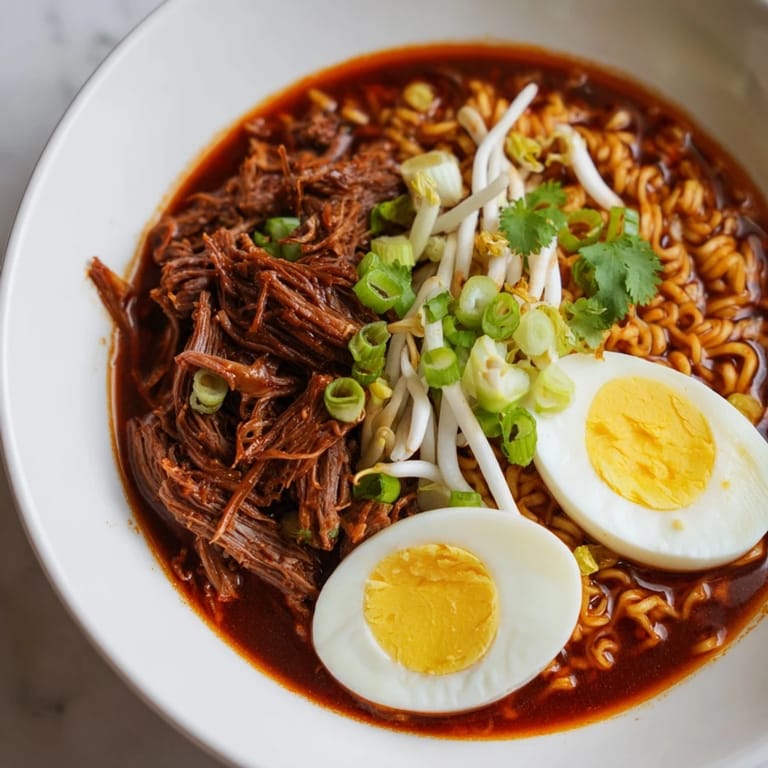
A perfectly cooked egg—runny in the middle, set on the outside—changes how you experience the whole bowl. The yolk breaks into the broth and adds this creamy richness that no oil or cream ever could, plus it cools the soup just enough that you're not burning your mouth on the first spoonful. I learned this by accident when I overcooked an egg and it didn't do the same thing, and now I time them obsessively because that moment when the yolk breaks is genuinely satisfying.
Customization and Your Own Spin
This dish is forgiving in the way that matters most—the broth can handle experimentation, and honestly, everyone at the table should feel like they're building their own meal. Some people want extra cilantro and lime, some go heavy on the chili oil, some add crispy fried shallots if they're feeling fancy. I once added a splash of fish sauce just to see what would happen, and it actually worked in a way I didn't expect.
- Crisp some shredded beef in a skillet before serving if you want a textural contrast alongside the tender stuff in the broth.
- Fresh cilantro and a good squeeze of lime are not optional—they're the finishing move that brings everything into focus.
- If you have leftover broth, it freezes beautifully and tastes even better the second time around.
 Save
Save This is the kind of dish that reminds you why cooking for people matters—it brings together unexpected things and somehow makes perfect sense. Serve it hot, let people go wild with toppings, and watch what happens.
Recipe FAQ
- → What type of beef works best for slow cooking in this dish?
Beef chuck roast is ideal due to its marbling and tenderness after long cooking times, breaking down nicely for shredding.
- → How do the dried chilies contribute to the broth's flavor?
Guajillo and ancho chilies add smoky, fruity, and mildly spicy notes, creating a complex, rich depth in the broth.
- → Can fresh ramen noodles be substituted with instant noodles?
Yes, fresh or instant ramen noodles can be used, but it's best to discard seasoning packets to maintain the authentic broth flavors.
- → What role does the sesame oil play in the broth?
Sesame oil adds a aromatic, nutty flavor that complements the beef and soy sauce, enhancing the overall umami profile.
- → How should the toppings be prepared for best taste?
Soft-boil eggs to creamy centers, slice scallions thinly, and use fresh bean sprouts and cilantro to add brightness and texture.
- → Is it possible to make a gluten-free version?
Use gluten-free ramen noodles and substitute soy sauce with a gluten-free alternative to accommodate dietary needs.