 Save
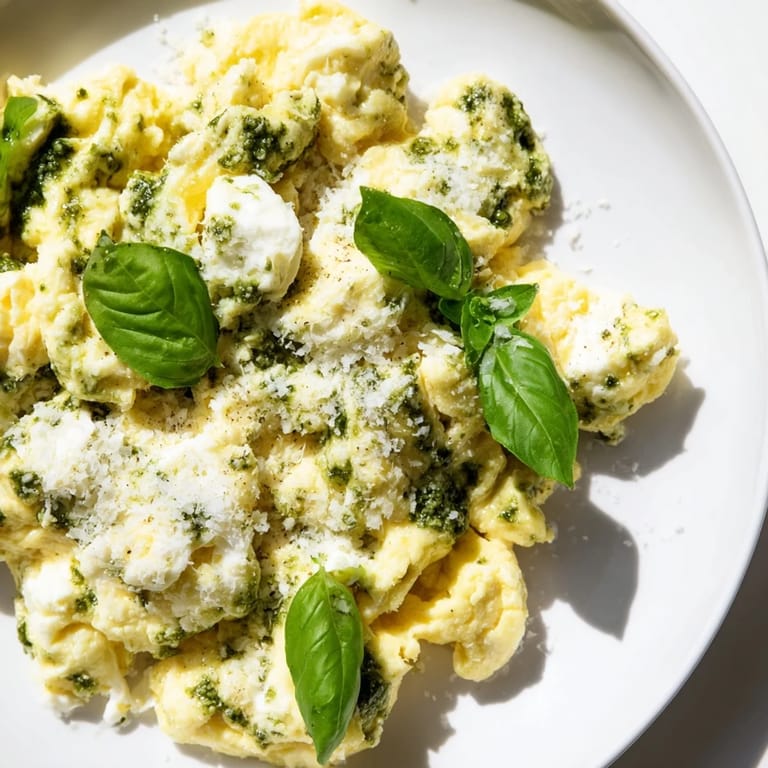
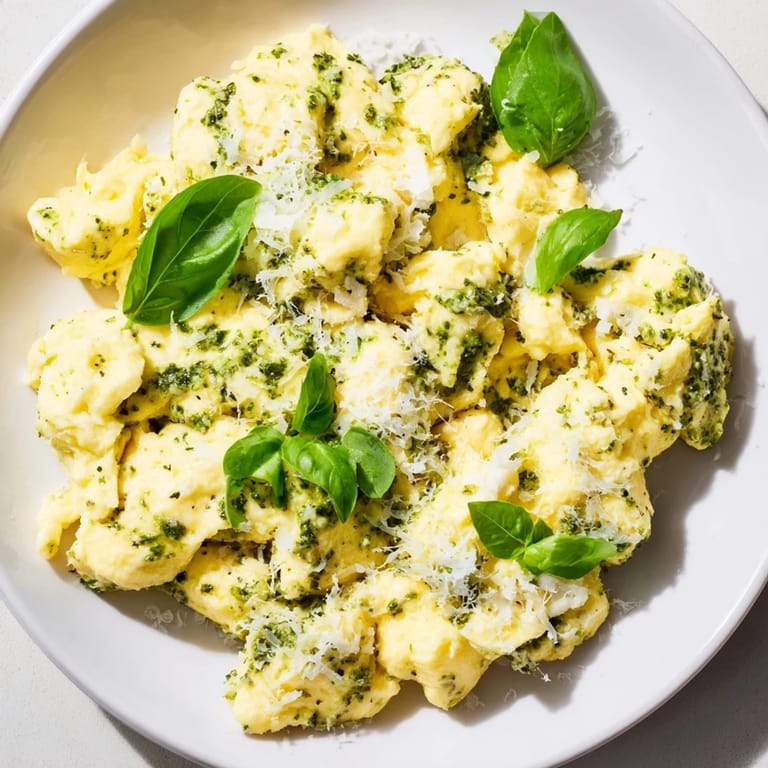
Save My discovery of cottage cheese in scrambled eggs happened purely by accident one Tuesday morning when I was rifling through the fridge, desperate to make breakfast feel less routine. I grabbed what I thought was Greek yogurt, whisked it into the eggs, and halfway through cooking realized my mistake—but by then, the creamy texture was already transforming everything into something unexpectedly luxurious. Now I do it intentionally, swirling in pesto at the last moment for that grassy brightness that makes these eggs taste nothing like breakfast diner fare.
I made this for my friend Sam on a Sunday when she was lamenting how tired she felt in the afternoons, convinced she needed more food at lunch. I served these eggs on toast with extra basil scattered on top, and she ate them quietly for a moment before asking for the recipe—not because they tasted fancy, but because they genuinely made her feel better for hours afterward. That's when I realized it wasn't just delicious, it was actually nourishing.
Ingredients
- Eggs: Four large ones create the fluffy base, and there's something about using eggs at room temperature that makes them scramble more gently and creamily than cold ones straight from the fridge.
- Milk or cream: Just two tablespoons makes an enormous difference in the final texture, pushing the eggs from ordinary to cloud-like.
- Cottage cheese: Use full-fat for richness, or low-fat if you're watching calories, but know that the fattier version carries flavor better and breaks down more elegantly into the eggs.
- Basil pesto: Two tablespoons of store-bought works perfectly fine, though homemade pesto with fresh basil from your windowsill tastes like a completely different breakfast.
- Salt and pepper: A quarter teaspoon of salt and eighth teaspoon of fresh black pepper season them perfectly without overpowering the delicate flavors you're building.
- Garnish: Fresh basil, extra pesto, Parmesan, and crusty bread transform this from simple to something you'd order at a cafe.
Tired of Takeout? 🥡
Get 10 meals you can make faster than delivery arrives. Seriously.
One email. No spam. Unsubscribe anytime.
Instructions
- Whisk your base:
- In a medium bowl, whisk together the eggs with milk or cream, salt, and pepper until the mixture looks uniform and slightly foamy. This early whisking is what gives you those impossibly fluffy eggs later.
- Warm the pesto:
- Heat your nonstick skillet over medium-low heat and add the pesto, letting it warm for just 30 seconds until the smell hits you—that's when you know the basil's aromatics are fully awake.
- Begin the cook:
- Pour in your egg mixture and let it sit undisturbed for 10 to 15 seconds, then gently push the cooked parts from the edges toward the center with a spatula, moving slowly and deliberately.
- Fold in the cottage cheese:
- When the eggs are still visibly creamy but beginning to set, scatter the cottage cheese over the top and fold it in gently, stirring just enough so it warms through and distributes evenly.
- Take it off heat:
- Remove the pan from heat immediately once the mixture looks barely set but still slightly wet, because the residual heat will continue cooking the eggs for another few seconds.
- Serve and celebrate:
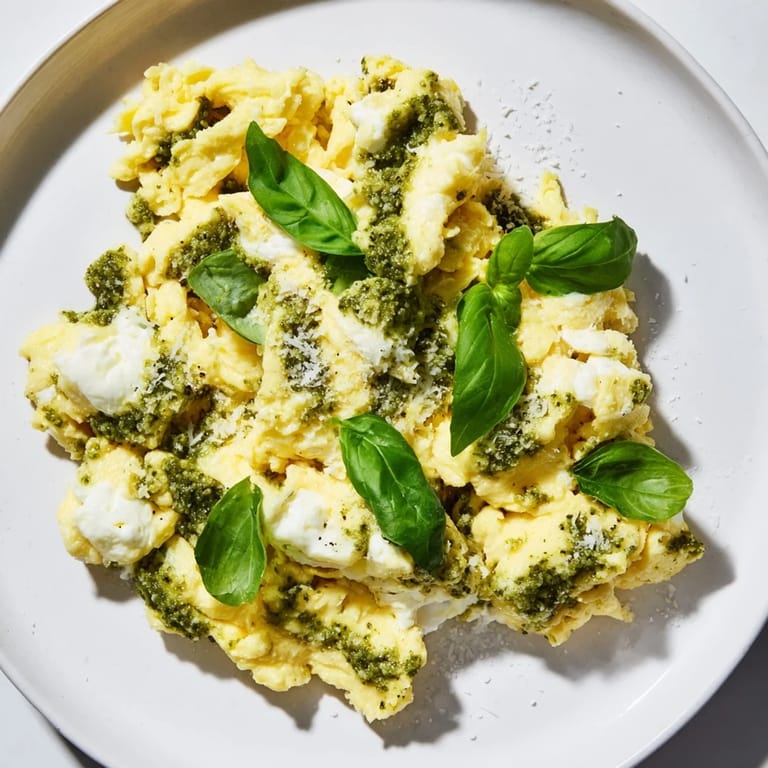
- Transfer to a plate while everything is still hot, top with fresh basil, an extra spoonful of pesto, and grated Parmesan, then serve alongside crusty bread or toast.
 Save
Save One morning my six-year-old nephew watched me make these and asked why the eggs looked like clouds with green mixed in, then tasted them and said they tasted like he was eating spring. That's the moment I stopped thinking of this as a quick breakfast hack and started seeing it as something that actually brings joy to the plate.
The Magic of Cottage Cheese in Eggs
Cottage cheese might sound odd in scrambled eggs until you realize that its subtle tang and creamy texture actually complement the richness of egg yolks in a way that feels intuitive once you taste it. The curds don't disappear entirely—they soften and distribute through the eggs, creating pockets of extra creaminess that make every bite feel luxurious without being heavy. Most people expect a heavier dish, but it somehow feels lighter and more satisfying simultaneously.
Why Pesto Changes Everything
Pesto isn't just a pasta topping, and using it in breakfast eggs fundamentally shifts what you're experiencing flavor-wise. The garlic, basil, and pine nuts bring a savory depth that prevents the dish from tasting one-dimensional, while the olive oil adds richness that sinks into the eggs rather than sitting on top. Even a small amount completely transforms the personality of what's on your plate.
Make It Your Own
This recipe is honestly a jumping-off point for whatever you have in your kitchen and whatever your taste buds are craving that morning. I've made versions with sun-dried tomato pesto when regular basil felt too summery, added wilted spinach for earthiness, and even tried ricotta instead of cottage cheese when I wanted a slightly different texture. The core technique—gentle heat, creamy dairy, pesto warmth—stays the same, but you get to decide what story you're telling with breakfast.
- Sun-dried tomato pesto brings deeper, almost jammy complexity compared to bright green basil.
- A handful of wilted spinach stirred in just before serving adds iron and a gentle earthiness without changing the texture.
- Ricotta creates a slightly lighter, less tangy version if cottage cheese's flavor doesn't speak to you.
 Save
Save These eggs have become the breakfast I make when I want to feel like I'm taking care of myself, or when I want to quietly impress someone I care about. There's something honest about a simple dish made with intention.
Recipe FAQ
- → Can I substitute the basil pesto?
Yes, sun-dried tomato pesto or other herb-based pestos work well, adding unique flavor variations.
- → What type of cheese is best to use?
Full-fat or low-fat cottage cheese can be used. For a different texture, ricotta is a great alternative.
- → How can I make the eggs creamier?
Adding a splash of milk or cream to the eggs before cooking enhances creaminess and richness.
- → How do I avoid overcooking the eggs?
Remove the pan from heat once eggs are softly scrambled and the cheese is warmed through to maintain a tender texture.
- → What are good serving suggestions?
Serve garnished with fresh basil, extra pesto, and grated parmesan alongside crusty bread or toast for a satisfying meal.