 Save
Save The first time I made crispy rice salmon stacks, I was trying to impress someone at a dinner party who kept talking about their favorite sushi place downtown. I didn't want to attempt actual sushi—too intimidating—but I found myself standing in front of the rice cooker thinking, what if I could capture that same feeling of delicate layers and umami but make it something I could actually control? The moment I pulled those golden, crackling rice squares out of the pan, I knew I'd discovered something special.
I made this for my sister's birthday brunch last spring, and she literally said, "You made this?" in that tone that made me feel like I'd just solved a puzzle. She took one bite and immediately started texting photos to her friends. Now whenever she has people over, she texts me asking if I can make another batch. That's when you know a recipe has become part of your actual cooking identity.
Ingredients
- Sushi rice: This is the foundation, and it needs to be actual sushi rice—not regular long-grain—because the starches are different and that's what gives you that sticky-enough-to-hold-together texture when you press it into the pan.
- Rice vinegar, sugar, and salt: These three together are what transform plain rice into something that actually tastes like something; don't skip the seasoning step or you'll just have crunchy bland squares.
- Vegetable oil for frying: Medium-high heat is your friend here; too hot and the outside burns before the inside gets warm, too cool and you end up with oily rice instead of crispy rice.
- Sushi-grade salmon: The "sushi-grade" part actually matters because you're eating it raw; buy it from a trusted fishmonger and use it the same day if possible.
- Soy sauce, sesame oil, sriracha, and lime juice: This combination is what makes the salmon taste vibrant instead of just fishy; the acid from the lime is doing a lot of work here.
- Avocado: Pick one that yields slightly to pressure but isn't mushy; if you're assembling ahead of time, toss your slices with a tiny bit of lemon juice so they don't brown.
- Sriracha mayo: This is the condiment that ties everything together; you could use regular mayo mixed with anything spicy, but this ratio feels right.
- Sesame seeds and nori: These are the finishing touches that make it look intentional and add textural contrast that your mouth will appreciate.
Tired of Takeout? 🥡
Get 10 meals you can make faster than delivery arrives. Seriously.
One email. No spam. Unsubscribe anytime.
Instructions
- Prepare the rice foundation:
- Rinse your sushi rice under cold water while running your fingers through it—you'll see the water go from milky white to almost clear, and that's the starch washing away. Cook it with the exact amount of water specified, cover it tight, and let it steam after the heat is off; this resting time is when the magic happens and all the grains finish cooking gently in their own steam.
- Season while it's still warm:
- Dissolve the sugar and salt in the rice vinegar before folding it into the rice, and fold gently—you're not trying to break the grains, just distribute the seasoning evenly. Let it cool to room temperature; warm rice will steam up your pan and you'll lose the crispy texture.
- Set and chill the rice sheet:
- Press the rice firmly into a parchment-lined pan so it holds together, but not so hard that you're compacting it into a brick. The chill time in the fridge is essential; cold rice is much more likely to stay in neat squares when you cut and fry it.
- Marinate the salmon:
- Combine your diced salmon with the soy, sesame oil, sriracha if you like heat, lime juice, and green onion, then taste it—the lime should be bright and noticeable, not hiding in the background. Chill it while you work on the rice so the flavors start merging together.
- Make your spicy mayo:
- Stir sriracha into mayo until it's evenly pink and smells like something you want to eat; this goes on last so it doesn't get absorbed into the warm rice and disappear.
- Fry the rice squares until they crackle:
- Cut your chilled rice sheet into two-inch squares—they'll look small but they'll puff slightly as they fry—and get your oil hot before they hit the pan. You'll hear them sizzle, and after a minute or so the bottoms will turn golden brown and feel crispy when you flip them; two to three minutes per side is perfect, and then you drain them immediately on paper towels so they stay crispy instead of absorbing all the oil.
- Assemble with intention:
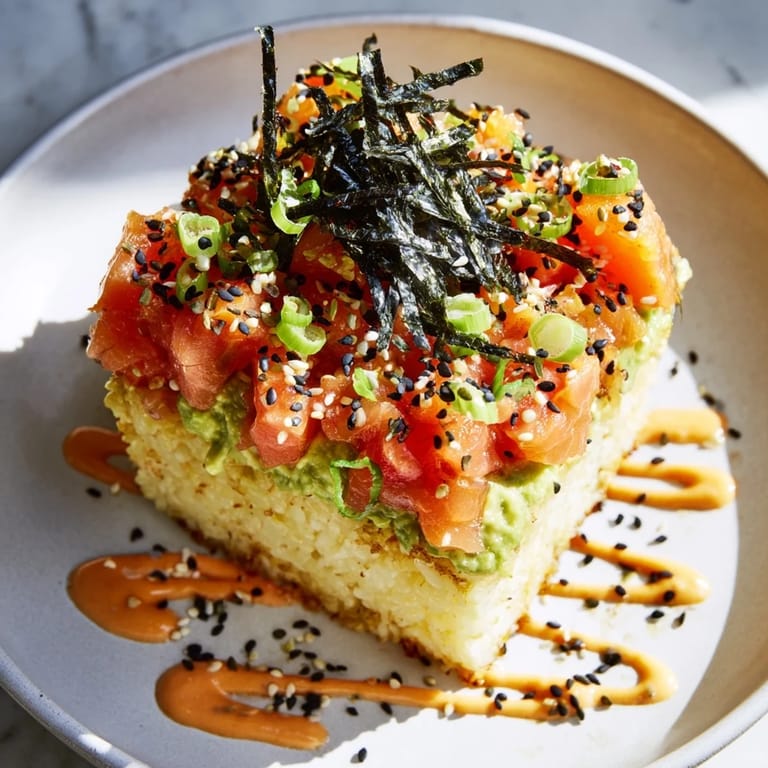
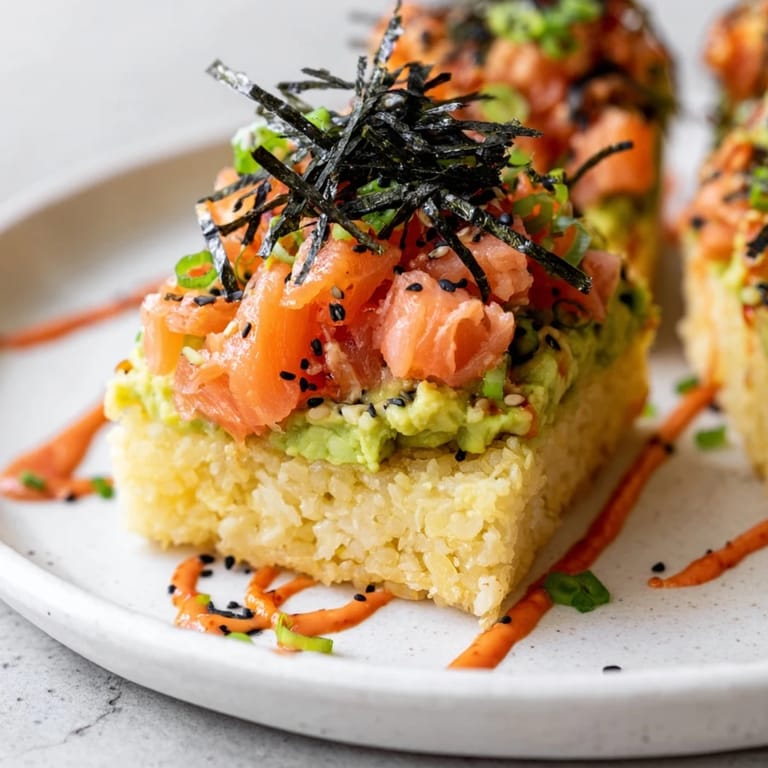
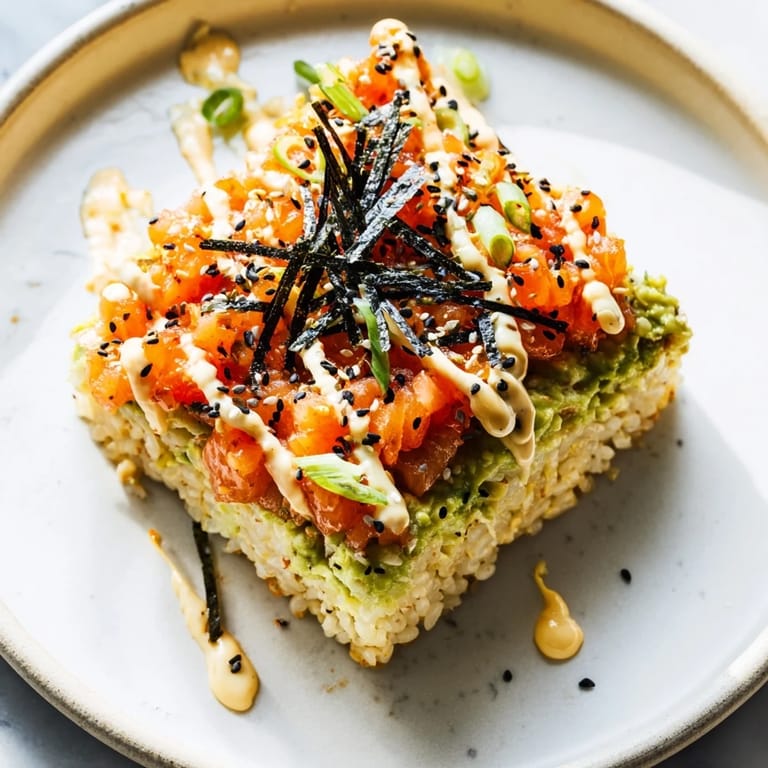
- Work quickly so the rice is still warm when you add the toppings, layering the avocado first, then the salmon mixture, then a small drizzle of spicy mayo so it doesn't overwhelm everything. Finish with sesame seeds, chives, and thin strips of nori if you're using it; the nori adds a subtle ocean flavor that ties the whole thing together.
 Save
Save What surprised me most about this recipe was how something so simple—just rice, fish, and vegetables—could feel like such a complete dish. It's become the thing I make when I want to feel like I'm cooking at a real restaurant, in my own kitchen, wearing whatever I want and tasting as I go.
The Crispy Rice Secret
The reason the rice actually stays crispy is because you're frying it in a very hot pan for just the right amount of time—long enough to get a golden, crunchy exterior but not so long that the inside gets oily. The starch in the sushi rice seals as it fries, creating a barrier that keeps moisture from getting in. If you use regular rice instead of sushi rice, you'll get something more fragile and less reliable; the short-grain starch composition is doing something specific that long-grain rice can't replicate.
Building Flavor Through Layers
Each component is seasoned separately so that when they come together, you taste each one distinctly—the salmon gets its brightness from lime and its depth from sesame oil, the avocado needs just enough salt to taste like itself, and the spicy mayo ties it all together with heat and richness. This approach is borrowed from how sushi chefs think about building a roll; nothing overwhelms anything else. If you add the sriracha directly to the salmon instead of making it into a separate mayo, it gets lost in the texture.
Timing and Temperature Matter Here
This is the kind of dish where temperature matters as much as technique—warm crispy rice contrasts with cool creamy avocado, and that contrast is part of why it's so satisfying to eat. The warm rice also softens the avocado slightly and brings out the salmon's flavors in a way that cold components alone wouldn't achieve. Think of it like you're creating a moment of warmth and freshness happening on the same bite.
- Have all your toppings prepped and ready before you start frying the rice so you can assemble immediately after it drains.
- If you're serving a crowd, fry the rice in batches and keep the finished squares on a warm plate; they'll stay crispier this way than if you make them all at once and let them sit.
- Leftover rice can be crisped up again in a dry pan the next day, though it won't be quite as perfect as the first time—but it's still better than soft rice.
 Save
Save Make this when you want to feel capable and proud, when you're cooking for people you want to impress, or honestly just when you're tired of regular dinner and want something that feels a little bit special. It's proof that restaurant-quality food doesn't require restaurant-level stress.
Recipe FAQ
- → How do I get the rice crispy?
Press cooked sushi rice firmly into a pan and chill it before cutting into squares. Fry these squares in hot oil until golden and crispy on each side.
- → Can I use canned salmon instead of fresh?
Yes, canned or cooked salmon works well as a substitute, offering convenience without compromising flavor significantly.
- → What sauces complement this dish best?
Spicy mayo adds creaminess and a mild heat; soy sauce and sesame oil in the salmon mix add savory layers. Lime juice brightens flavors.
- → How should I serve the salmon stack?
Serve immediately while the rice squares remain warm and crispy, topped with avocado, salmon mix, and garnished with sesame seeds and herbs.
- → Are there common allergens to be aware of?
Yes, this dish contains fish, soy, egg (in mayo), and sesame. Check any store-bought sauces for gluten or other allergens.
- → What can I add for extra freshness?
Pickled ginger or thin cucumber slices add a refreshing contrast to the rich layers.