 Save
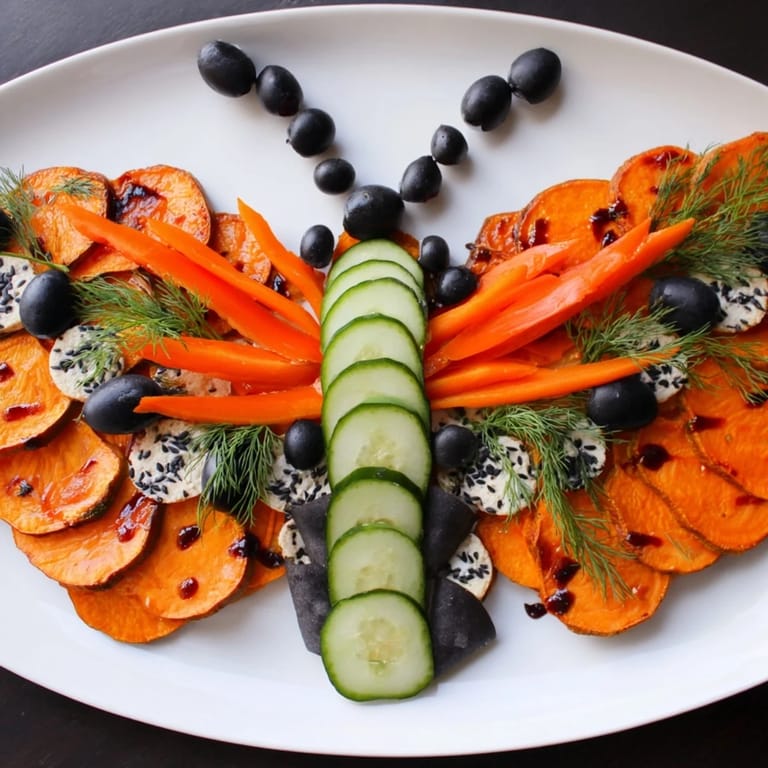
Save I'll never forget the first time I created this Monarch Butterfly Wings platter for my niece's garden party. She'd been studying these magnificent insects in school, and I wanted to bring her fascination to life on the dinner table. As I arranged those vibrant orange and black elements on the platter, watching the pattern come together felt like I was painting with food—each ingredient a brushstroke adding to something truly magical. The moment her face lit up when she saw it was worth every minute of preparation.
I remember my sister asking me to bring something to her daughter's birthday party, and I arrived with this butterfly platter tucked carefully in my car. The kids literally gasped when I unveiled it, and instead of just eating, they started telling stories about monarch migrations and transformation. That's when I realized this dish does something unexpected—it brings people together around wonder, not just hunger. My sister still talks about how the kids talked about that platter weeks later.
Ingredients
- Sweet potato, thinly sliced and roasted: This is your warm, earthy orange. Roasting concentrates the natural sweetness and gives it that slightly caramelized edge that makes people say 'these taste fancy'—a trick I learned from making them dozens of times is to slice them thin so they crisp up at the edges
- Carrot, peeled and sliced into thin rounds: Bright, crunchy, and reliable. These are your workhorse orange pieces that fill space beautifully and stay fresh longer than softer alternatives
- Orange bell pepper, deseeded and sliced into strips: Raw pepper brings sweetness and that satisfying snap that makes eating from a platter actually fun, not just food
- Cheddar cheese, cubed: The savory anchor that keeps everything from being too vegetable-forward. Sharp cheddar especially brings a punch that makes people notice
- Black olives, pitted and halved: These create those dramatic black spots and edges that make the butterfly pattern actually readable. The briny saltiness is essential for balance
- Black grapes, halved: A texture surprise that adds natural sweetness and moisture. They're easier to eat than whole grapes and won't roll away from where you placed them
- Black sesame or black rice crackers: These give structural interest and that satisfying crunch. I always lay them flat to catch the light—they photograph beautifully and add genuine texture variation
- Balsamic glaze: Just a drizzle, used sparingly. This is the secret that makes everything taste like you spent hours on it. A little goes a long way, and the dark sheen makes the pattern pop
- Cucumber, sliced lengthwise into sticks: The butterfly's body—pale, cool, and geometrically perfect. These stay firm and give you something structural to build everything around
- Cream cheese, softened: Your edible glue and your highlight tool. Small dots create the white spots on monarch wings that make the whole thing suddenly anatomically correct
- Fresh dill or microgreens: The antennae that complete the transformation. Even optional garnishes matter for the story you're telling with food
Tired of Takeout? 🥡
Get 10 meals you can make faster than delivery arrives. Seriously.
One email. No spam. Unsubscribe anytime.
Instructions
- Prep everything like you're setting up your workstation:
- Roast your sweet potato slices until they're just starting to caramelize at the edges—about 20 minutes in a 400°F oven. While they cool, peel your carrot and slice it into thin rounds (a mandoline makes this effortless, but careful with your fingertips). Deseed your orange pepper and slice it into strips. Cut your cheddar into small cubes. Pit and halve your olives and grapes. Set your crackers out on a small plate. Have your balsamic glaze ready. This prep work is meditative—it's where you slow down and think about the arrangement you're about to create.
- Build your butterfly's body down the center:
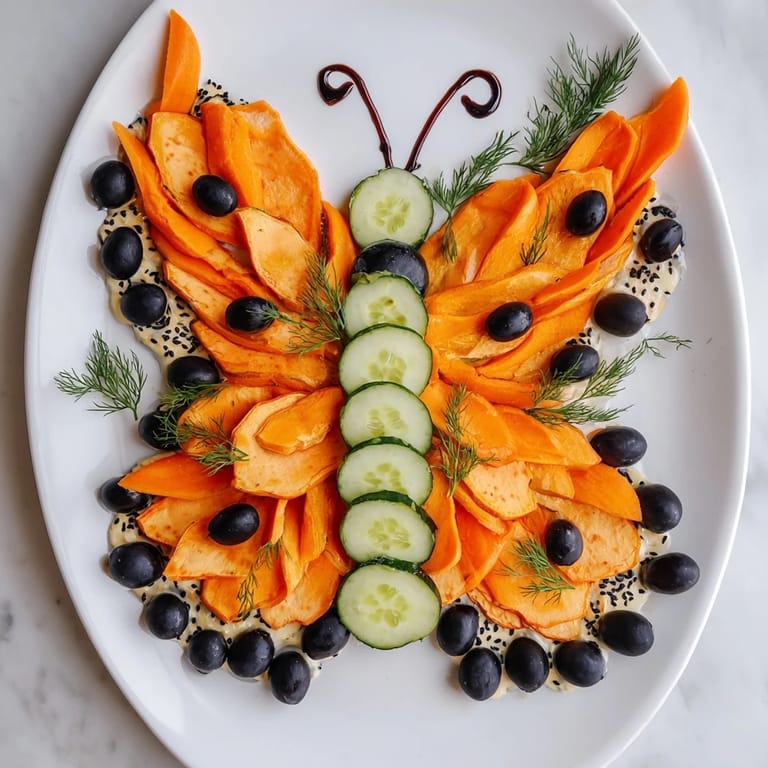
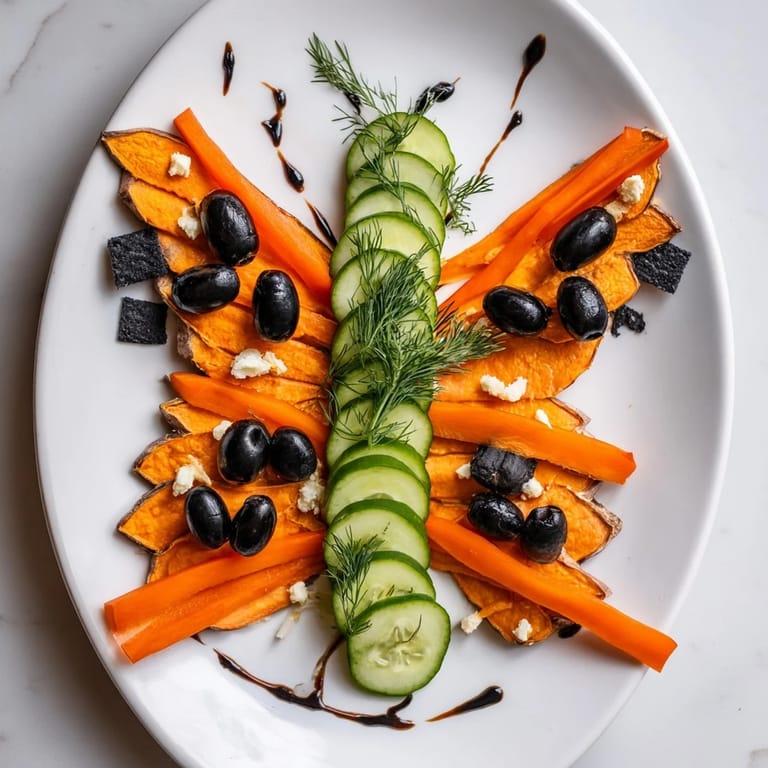
- On your largest, most beautiful platter, lay cucumber sticks lengthwise down the middle. These sticks should be fairly close together so they create a solid, visible 'body.' Step back and look at it. This is your anchor, the thing everything else will reference. The geometry matters here—a straighter body makes a more striking butterfly.
- Fan out your orange elements in mirror image:
- On both sides of your cucumber body, arrange your orange pieces in a symmetrical pattern that fans outward. Think of the upper wings and lower wings of an actual butterfly. Sweet potato pieces on the outside, carrot rounds slightly closer to the body, bell pepper strips filling in the curves. This is where your eye takes over from the recipe. You're not following a map—you're creating one. Step back frequently. Does it look balanced? Does it feel like wings?
- Create contrast with black elements:
- Now fill in the spaces between your orange elements with black olives, black grapes, and sesame crackers. These aren't randomly placed—they're creating the bold black edges and spotted pattern that makes a monarch wing instantly recognizable. Your olives become the thick black borders. Your grapes become dimension. Your crackers add that graphic quality. Take your time here. This is where the platter transforms from 'pretty' to 'wow.'
- Add your cream cheese details:
- Using a small spoon, place tiny dots of softened cream cheese along the black edges and in key spots. These white dots are the signature of a monarch wing—they're not decoration, they're species authenticity. I usually place them where the black meets the orange, creating a subtle highlight that catches the light.
- Drizzle your balsamic glaze with intention:
- A few delicate drizzles of balsamic glaze, especially along the wing patterns and near the body. Don't over-do this—you want highlights, not a sauce situation. The dark glaze deepens the blacks and adds shine.
- Crown it with antennae:
- At the top of your cucumber body, nestle a small bundle of dill or microgreens upright to form antennae. This final touch is what makes the butterfly 'complete'—suddenly your platter isn't abstract anymore, it's clearly a creature.
- Present and encourage interactive eating:
- Bring your platter to the table with a moment of pause. Let people actually see it before they eat. Then invite them to build their own bites—a piece of sweet potato with an olive, a cheese cube with some dill, a cracker loaded with pepper. The beauty of this platter is that it's visually one thing but tastes different depending on how people combine the elements.
 Save
Save There's a moment that happens every time I make this platter where someone asks, 'Can we actually eat this or is it decoration?' and I realize I've created something that transcends the usual appetizer. It becomes a memory. Years later, people mention that butterfly platter from that one party—not because the food was revolutionary, but because they felt transported. Food that makes people pause and wonder is rare, and that's when I know I've done something right.
Choosing Your Orange Elements
The beauty of this design is that you're not locked into any single ingredient for your orange sections. I've experimented with roasted butternut squash when I had it on hand—it's slightly softer but almost more luxurious than sweet potato. Orange cherry tomatoes work if you want something bright and tart, though I always halve them so they're manageable. Even thin slices of dried apricots add an unexpected sweetness that some guests really respond to. The key is choosing elements that stay firm enough to stay where you place them, and that have enough flavor to stand alone if someone eats just one piece.
The Art of Platter Symmetry
Symmetry is what makes this feel intentional rather than random. I learned this the hard way—my first butterfly was lopsided, and instead of looking like a creature, it looked like an accident. Now I use the center line of the cucumber as my visual guide, and I place elements on one side before mirroring them exactly on the other. It takes an extra 10 minutes, but it's the difference between 'nice' and 'they're taking photos.' Think of it like the butterfly is looking straight at the camera. Every element on the left wing should have a matching element on the right. That's what your eye wants to see, even if you can't consciously articulate why.
Pairing and Presentation
This platter shines alongside something refreshing—a crisp white wine if your crowd drinks, or sparkling water with fresh citrus if they don't. The lightness of the beverages lets the vegetables be the star instead of competing with heavy flavors. I also always serve small plates nearby and maybe toothpicks if the platter is sitting out for a while, since the presentation matters too—people want to take bites without destroying the design. The magic happens when someone pauses to appreciate it before eating, so give them permission to do that.
- A crisp Sauvignon Blanc or Pinot Grigio lets the fresh vegetables shine without overwhelming the palate
- Sparkling water with lemon slices feels celebratory and keeps everything in the 'fresh and light' category
- Small appetizer plates and toothpicks let guests build bites without dismantling your artwork
 Save
Save Every time I make this platter, I'm reminded that food is a language. This butterfly speaks in color and form before anyone ever takes a bite. It's a small way of saying 'you matter'—that I cared enough to make something beautiful. That's the real recipe here.
Recipe FAQ
- → How do I create the butterfly wing pattern?
Arrange the orange ingredients in a fanned pattern on either side of the cucumber "body," then fill spaces with black olives, grapes, and crackers to mimic the wings’ signature markings.
- → Can I substitute any ingredients for variety?
Yes, roasted butternut squash or orange cherry tomatoes can replace sweet potatoes for orange elements; purple carrots or beets add extra color contrast.
- → Is this platter suitable for gluten-free diets?
Use gluten-free crackers to ensure the dish remains gluten-free, alongside naturally gluten-free fresh produce.
- → What is the purpose of the cream cheese dots?
Cream cheese dots add decorative white spots on the black wing edges, enhancing the monarch wing’s realistic appearance.
- → How should I serve this platter?
Present the platter immediately, encouraging guests to build their own bites from the colorful ingredients arranged in butterfly wing form.