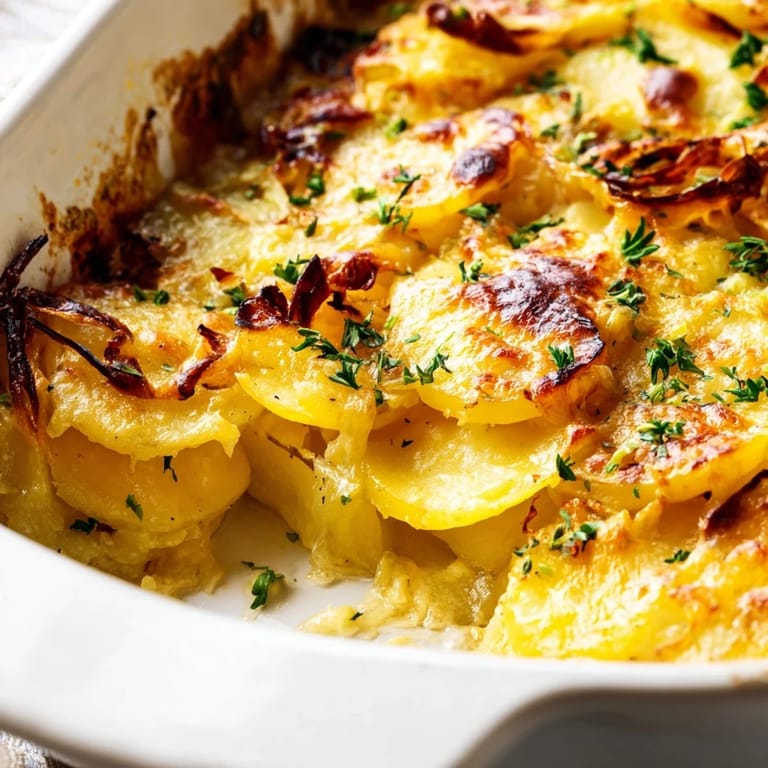
 Save
Save My neighbor brought over a casserole dish covered in foil one Sunday evening, still warm from her oven. She called it her "cheater's French onion" and when I lifted the corner, the smell of sweet caramelized onions and melted cheese made my stomach growl audibly. Inside were layers of golden potatoes buried under a blanket of Gruyère, and I ate three helpings standing at the counter. I've been making my own version ever since, tweaking the technique until the potatoes come out crispy-edged and the onions taste like they've been cooking all day.
I made this the night my brother announced he was going vegetarian, and I panicked because I'd planned a steak dinner. I threw together these potatoes as a last-minute main for him, and by the end of the meal, everyone was scraping his plate clean while their steaks sat half-eaten. He still asks me to make it every time he visits, and now I think of it as my accidental victory dish.
Ingredients
- Yukon Gold or russet potatoes: Yukon Golds give you a buttery flavor and hold their shape beautifully, while russets get fluffier and crisp up even more on the edges.
- Olive oil (for potatoes): This helps the slices brown evenly in the oven without sticking, and adds a subtle richness that complements the cheese.
- Kosher salt and black pepper: Season generously because potatoes need more salt than you think to really shine.
- Yellow onions: They have the perfect balance of sweetness and sharpness, and they break down into silky, jammy layers when you take your time.
- Unsalted butter and olive oil (for onions): The combination prevents burning while giving the onions a glossy, rich finish.
- Fresh thyme: This herb is the secret handshake between potatoes and onions, tying the whole dish together with a woodsy, earthy note.
- Balsamic vinegar: Just a teaspoon cuts through the sweetness and adds a subtle tang that makes the onions taste even more complex.
- Gruyère cheese: It melts into stretchy, golden pools and has a nutty depth that defines the French onion flavor.
- Parmesan cheese: Optional, but it adds a salty, sharp punch that makes the top layer extra crispy.
- Fresh parsley: A handful of green at the end brightens everything up and makes the dish look like you really tried.
Tired of Takeout? 🥡
Get 10 meals you can make faster than delivery arrives. Seriously.
One email. No spam. Unsubscribe anytime.
Instructions
- Get the oven ready:
- Preheat your oven to 220°C (425°F) and line a large baking sheet with parchment paper so the potatoes don't stick. This high heat is what gives you those crispy, golden edges.
- Prep and roast the potatoes:
- Toss your potato slices with olive oil, salt, and pepper until every piece is lightly coated, then spread them out in a single layer on the baking sheet. Roast for 25 to 30 minutes, flipping them halfway through, until they're tender inside and starting to brown at the edges.
- Caramelize the onions low and slow:
- While the potatoes roast, melt butter and a tablespoon of olive oil in a large skillet over medium-low heat, then add your sliced onions and a pinch of salt. Stir every few minutes for 25 to 30 minutes until they turn a deep golden brown and smell like pure comfort.
- Finish the onions with aromatics:
- Stir in the thyme and balsamic vinegar, letting everything cook together for another minute or two until the vinegar has mostly evaporated. Remove the skillet from the heat and set it aside.
- Lower the oven and assemble:
- Turn your oven down to 200°C (400°F) and lightly grease a baking dish, then layer the roasted potato slices in the dish, overlapping them slightly like fallen dominoes. Spoon the caramelized onions evenly over the top, then shower everything with grated Gruyère and Parmesan if you're using it.
- Bake until bubbly:
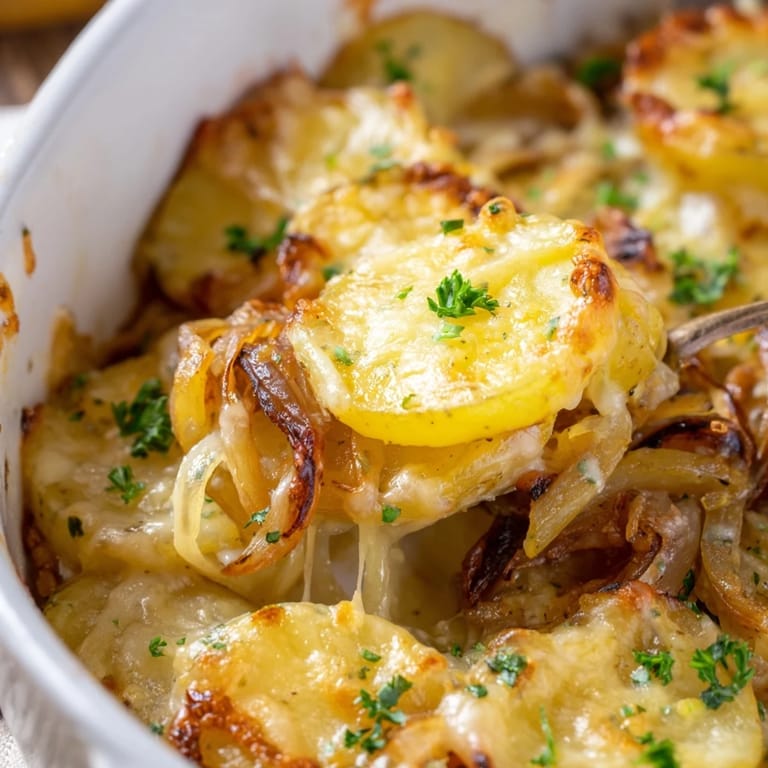
- Slide the dish into the oven and bake for 10 to 15 minutes, just until the cheese melts into a golden, bubbling blanket. Let it cool for a few minutes before you dig in, then scatter fresh parsley over the top.
 Save
Save The first time I served this at a dinner party, my friend Laura scraped the dish clean with a spoon and declared it better than any side dish she'd ever paid for at a restaurant. That's when I realized some recipes don't need to be fancy or complicated to make people feel cared for. They just need to taste like you meant it.
Make It Your Own
If you want a little more depth, splash a quarter cup of dry white wine into the onions halfway through caramelizing and let it cook off. You can also swap the Gruyère for Swiss cheese if that's what you have on hand, though the flavor will be a bit milder. For a richer version, toss the potatoes with a tablespoon of melted butter along with the olive oil before roasting.
Storing and Reheating
Leftovers keep in an airtight container in the fridge for up to three days, and they reheat beautifully in a 180°C (350°F) oven for about 15 minutes. The microwave works in a pinch, but the potatoes won't crisp back up the same way. If you're planning to make this ahead, you can roast the potatoes and caramelize the onions a day early, then assemble and bake everything fresh when you're ready to serve.
Serving Suggestions
These potatoes are incredible alongside a simple roast chicken, grilled steak, or pan-seared pork chops, but I've also served them as a vegetarian main with a big arugula salad dressed in lemon and olive oil. They're rich enough to stand on their own, especially if you add a fried egg on top for breakfast the next day.
- Pair with a crisp green salad to balance the richness of the cheese and onions.
- Serve alongside roasted vegetables like Brussels sprouts or green beans for a full vegetarian spread.
- Add a dollop of sour cream or crème fraîche on top for extra indulgence.
 Save
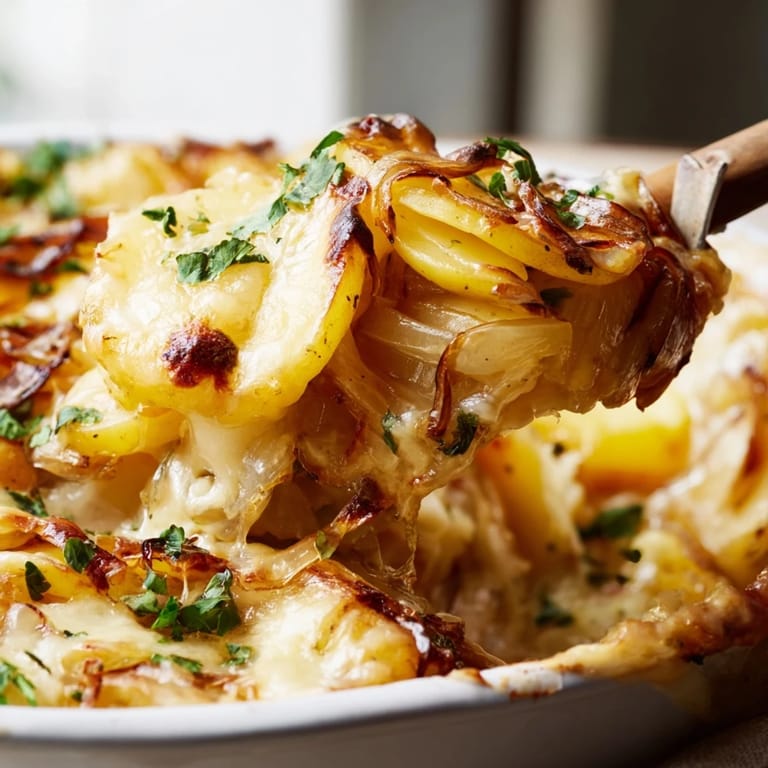
Save This dish has become one of those recipes I make without thinking, the kind that feels like muscle memory and tastes like home. I hope it finds a spot in your regular rotation, too.
Recipe FAQ
- → What type of potatoes work best for this dish?
Yukon Gold or russet potatoes are ideal due to their texture and ability to roast evenly, providing a tender yet firm base for the layers.
- → How do I achieve deeply caramelized onions?
Cooking thinly sliced onions slowly over medium-low heat with butter and olive oil, stirring frequently for 25–30 minutes until golden brown, ensures rich caramelization.
- → Can I substitute Gruyère cheese?
Yes, Swiss cheese makes a good alternative offering similar meltability and flavor, although Gruyère provides a distinct nuttiness.
- → Is there a way to enhance the onion flavor?
Adding a splash of dry white wine during caramelization adds depth and subtle acidity that complements the sweetness of the onions.
- → How should this dish be served?
It pairs wonderfully as a warm side with roast chicken or steak, or can be enjoyed on its own alongside a fresh green salad.
- → Is this dish gluten-free?
Yes, as long as all ingredients such as cheese are certified gluten-free, the dish contains no gluten.